 Image 1 of 3
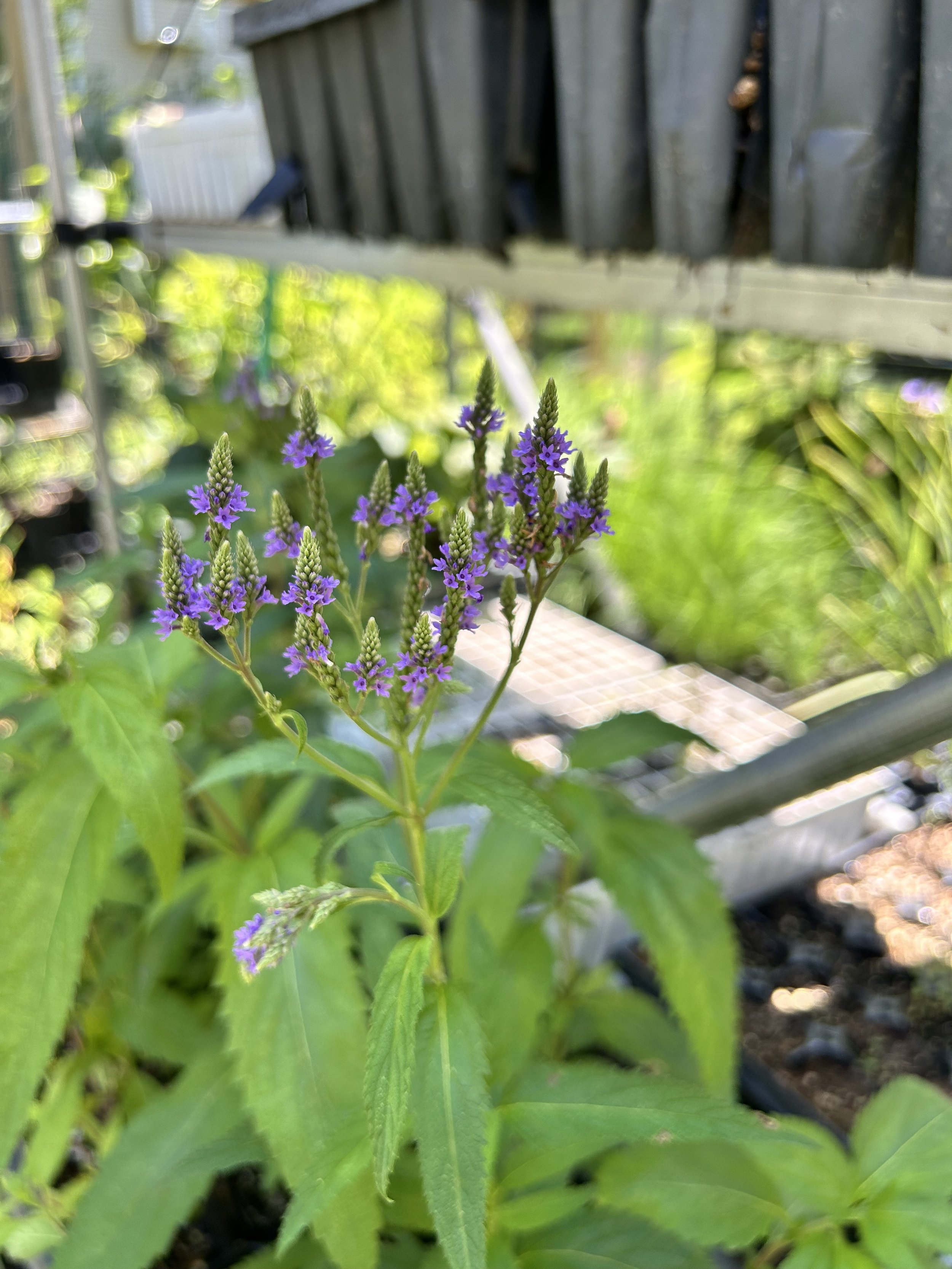 Image 2 of 3
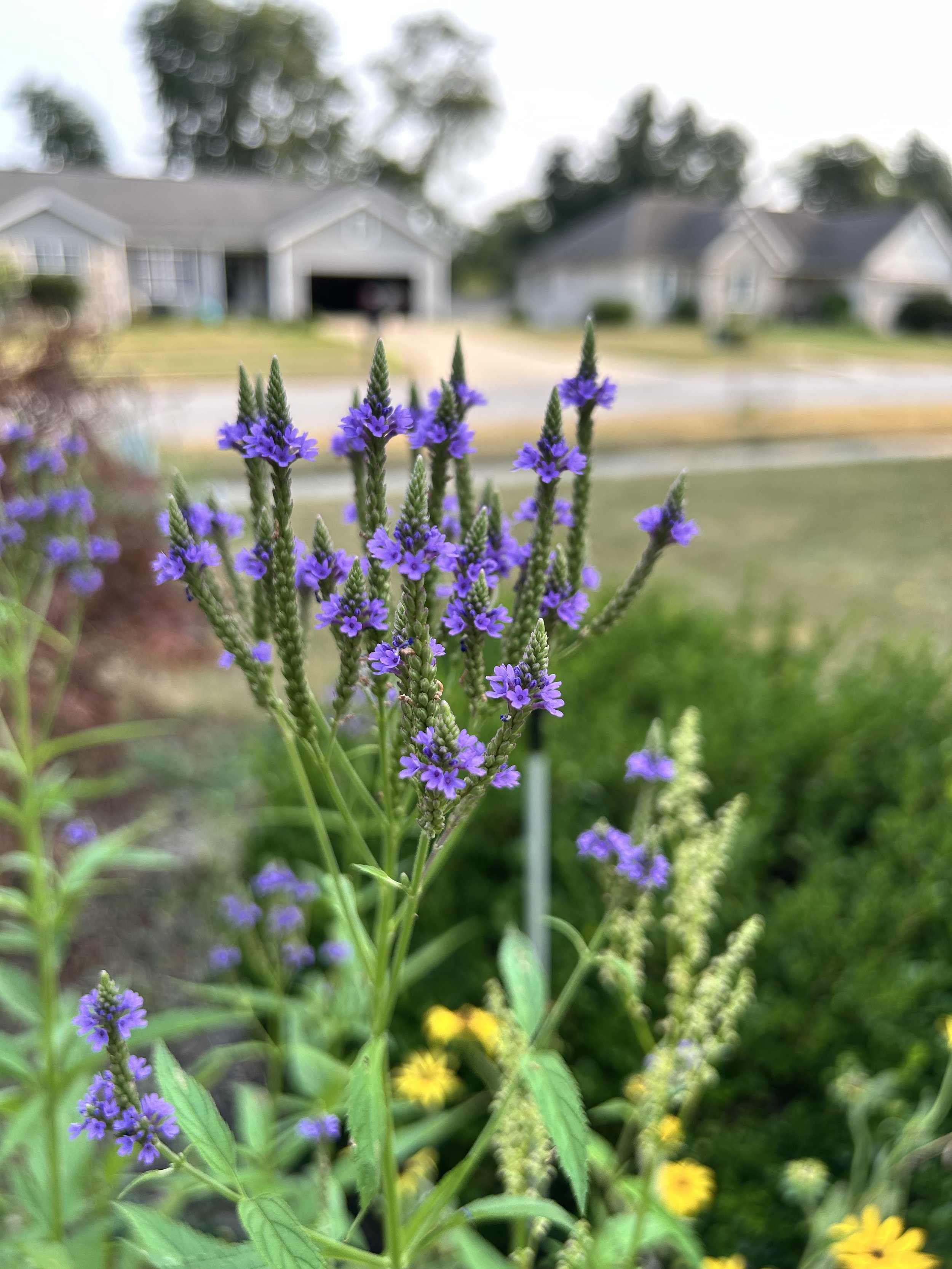 Image 3 of 3
Blue vervain is, in my opinion, a highly underrated perennial Michigan-native herbaceous flowering plant which is easy to grow and high in wildlife value. It is an early-successional species that often flowers in its first year, and spreads slowly by rhizomes and seeds. The plant is upright and non-flopping. Its purple-blue flower heads are candelabra-shaped and long-lasting, blooming from panicle bottom to top in slow sequence, which allows for flowering through the entire summer. Verbena hostata will grow in almost any conditions, but thrives in moist soils and full sun. It is an especially nice plant for rain gardens and pond edges.
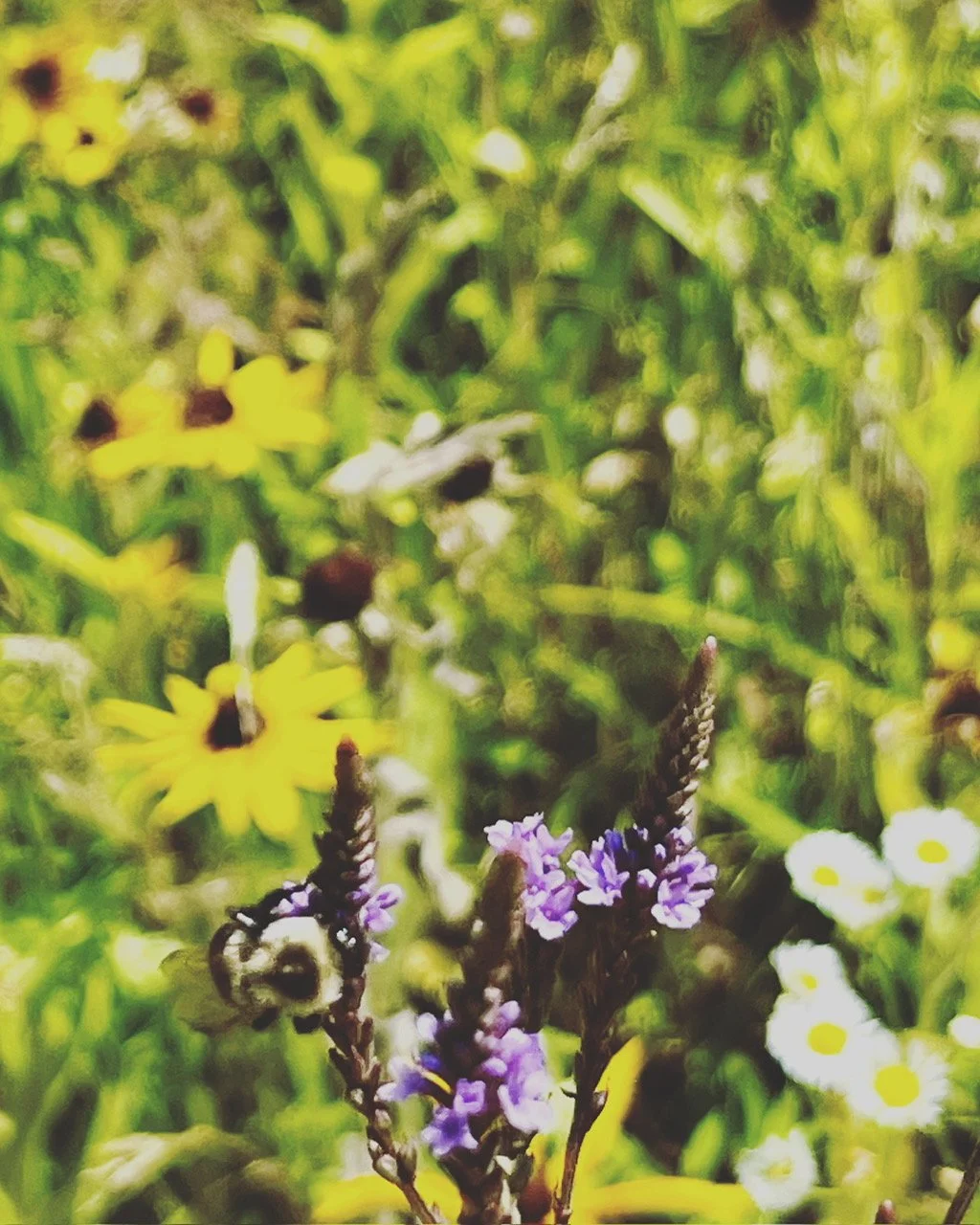
Its aforementioned wildlife value is ample. Many insects such as long-tongued bees, short-tongued bees, epoline cuckoo bees, eucerine miner bees, halictid bees, verbena bees (a Verbena specialist), thread-waisted wasps, bee flies, thick-headed flies, butterflies, skippers, hummingbirds, and golden soldier beetles, visit the small, tubular flowers for nectar (and, to a lesser extent, pollen). Common buckeye butterflies and Verbena moths (another specialist) use this plant as a larval host, eating the leaves as caterpillars. Bird lovers will further enjoy Northern cardinals, Song sparrows, and Dark-eyed juncos feeding on the seeds in fall-winter. Additionally, the plant’s bitter, rough leaves are largely ignored by deer.
There is a long history of human medicinal uses for this species as well; the genus Latin name “verbena” translates to “sacred plant”. Verbena tea has been used to treat headaches, insomnia, depression, anxiety, coughs, cramps, kidney stones, fevers. Crushed leaves have been applied topically to treat wounds, ulcers, acne and more. It also has been used to improve lactation for nursing mothers. It has even been said that vervain was used on the wounds of Jesus Christ when he was removed from the cross, which yielded the nickname, “herb of the cross”.
Sun: full - partial sun
Height: 3-5’
Flower color: blue-purple
Bloom time: June - September
Wetness: medium wet - medium dry
Soil: sandy loam, loam, clay
Root system: fibrous clump with small rhizomes
Blue vervain is, in my opinion, a highly underrated perennial Michigan-native herbaceous flowering plant which is easy to grow and high in wildlife value. It is an early-successional species that often flowers in its first year, and spreads slowly by rhizomes and seeds. The plant is upright and non-flopping. Its purple-blue flower heads are candelabra-shaped and long-lasting, blooming from panicle bottom to top in slow sequence, which allows for flowering through the entire summer. Verbena hostata will grow in almost any conditions, but thrives in moist soils and full sun. It is an especially nice plant for rain gardens and pond edges.
Its aforementioned wildlife value is ample. Many insects such as long-tongued bees, short-tongued bees, epoline cuckoo bees, eucerine miner bees, halictid bees, verbena bees (a Verbena specialist), thread-waisted wasps, bee flies, thick-headed flies, butterflies, skippers, hummingbirds, and golden soldier beetles, visit the small, tubular flowers for nectar (and, to a lesser extent, pollen). Common buckeye butterflies and Verbena moths (another specialist) use this plant as a larval host, eating the leaves as caterpillars. Bird lovers will further enjoy Northern cardinals, Song sparrows, and Dark-eyed juncos feeding on the seeds in fall-winter. Additionally, the plant’s bitter, rough leaves are largely ignored by deer.
There is a long history of human medicinal uses for this species as well; the genus Latin name “verbena” translates to “sacred plant”. Verbena tea has been used to treat headaches, insomnia, depression, anxiety, coughs, cramps, kidney stones, fevers. Crushed leaves have been applied topically to treat wounds, ulcers, acne and more. It also has been used to improve lactation for nursing mothers. It has even been said that vervain was used on the wounds of Jesus Christ when he was removed from the cross, which yielded the nickname, “herb of the cross”.
Sun: full - partial sun
Height: 3-5’
Flower color: blue-purple
Bloom time: June - September
Wetness: medium wet - medium dry
Soil: sandy loam, loam, clay
Root system: fibrous clump with small rhizomes