 Image 1 of 4
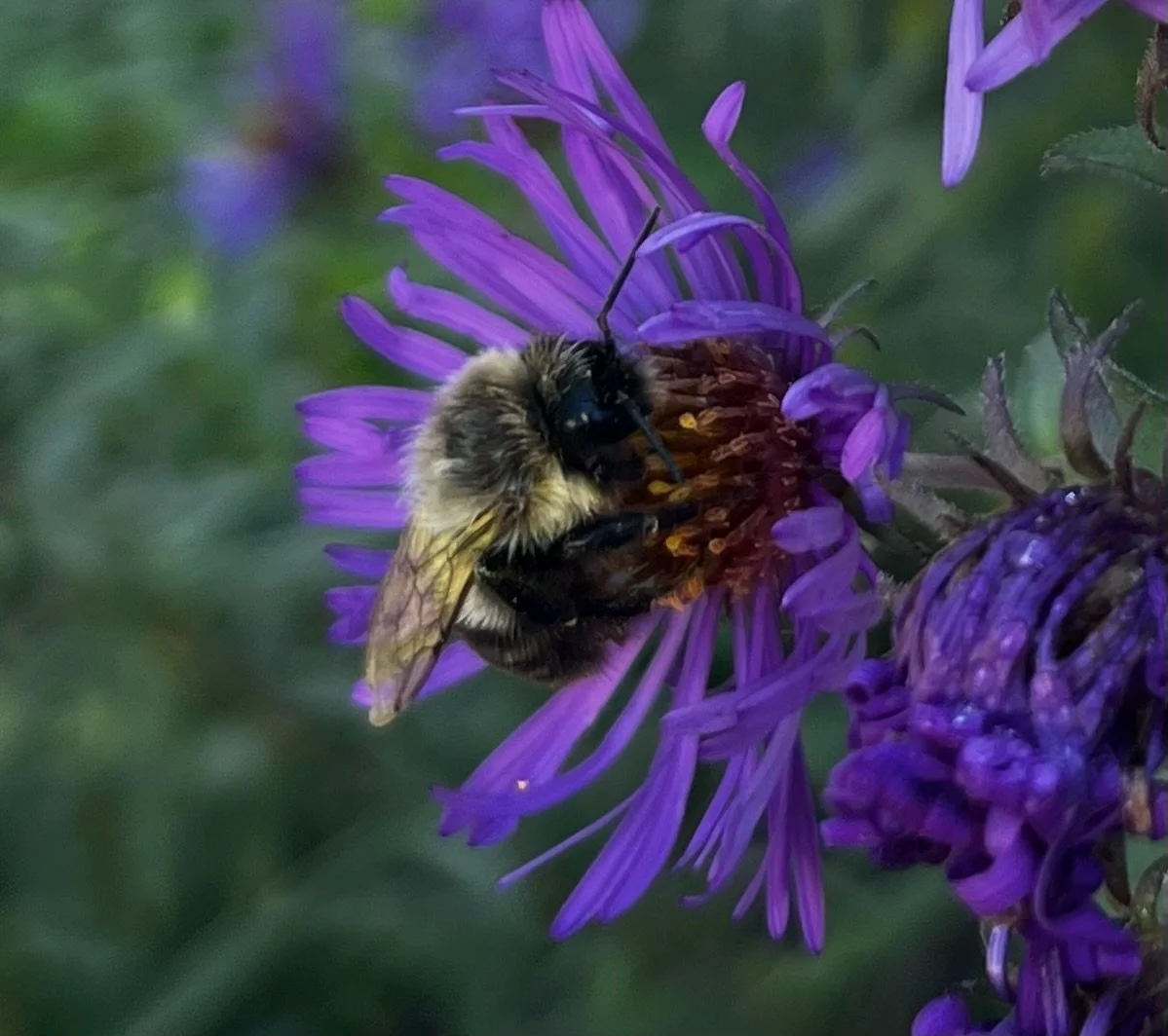 Image 2 of 4
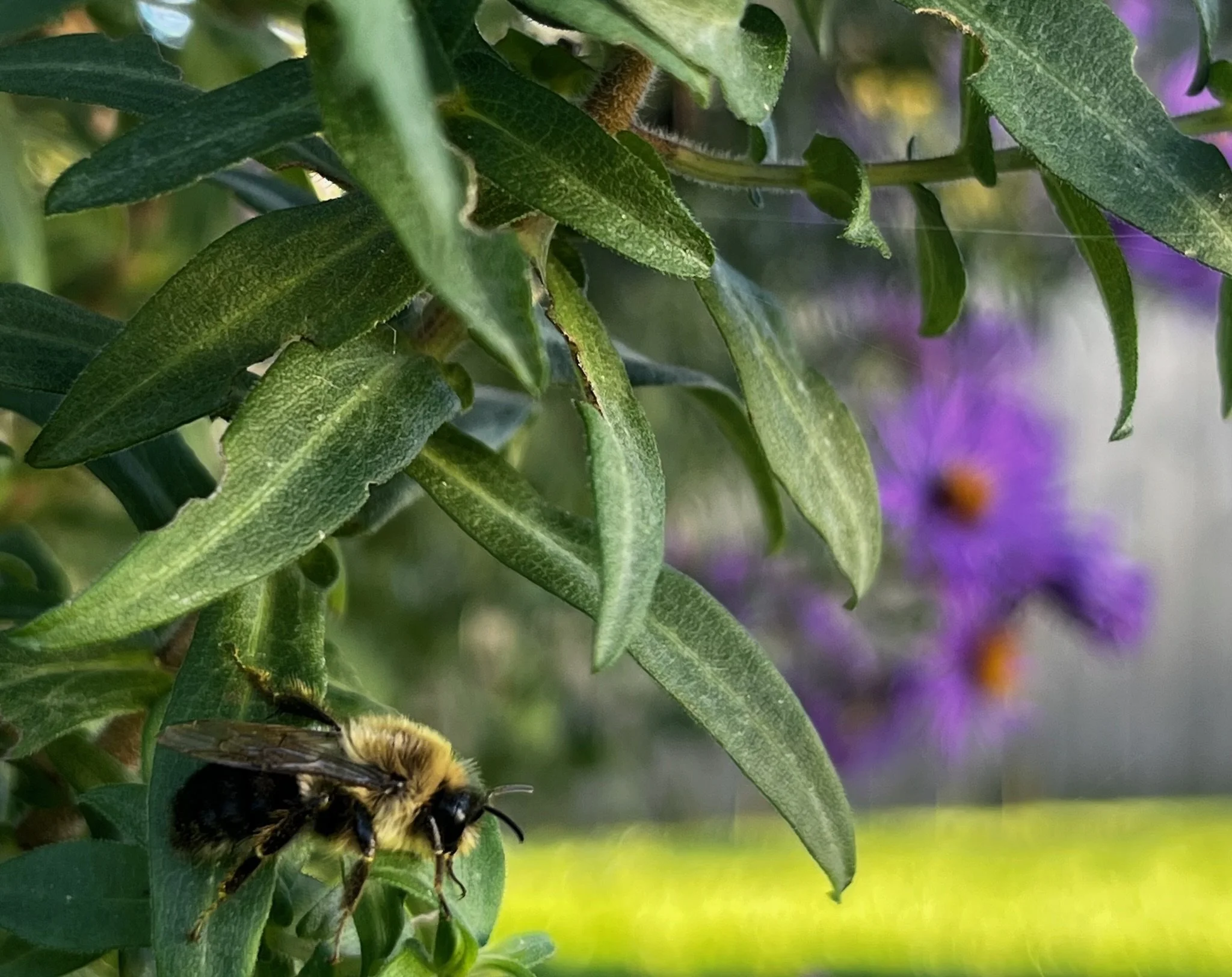 Image 3 of 4
 Image 4 of 4
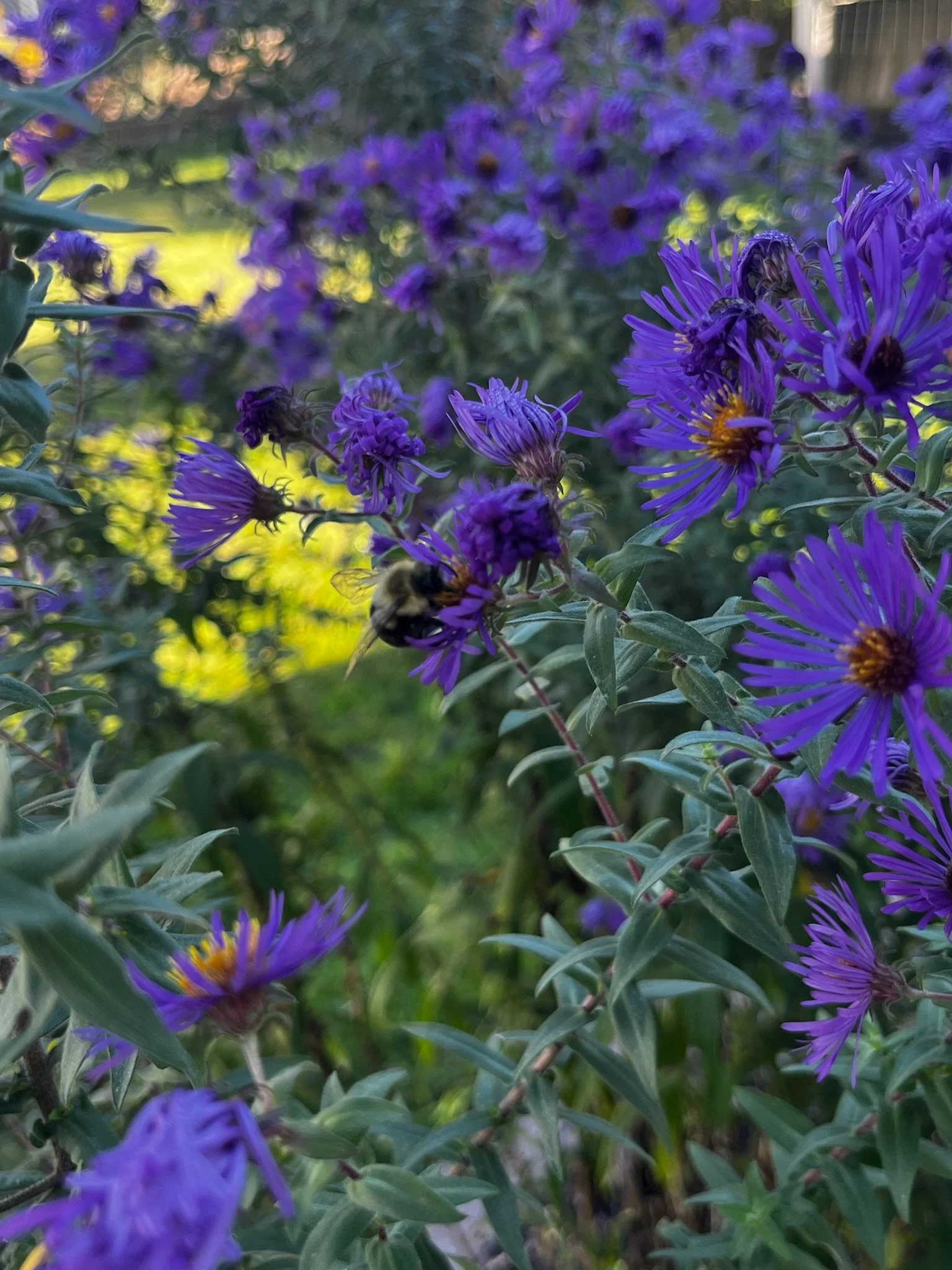
New England Aster is a native perennial wildflower that is a show-stopper in fall, towering high over the plants that are done blooming, and bringing an explosion of purple to the area. Symphyotrichum novae-angliae is incredibly high in wildlife value and is considered a keystone species because it disproportionally provides for the ecosystem. It’s daisy-like flowers offer abundant pollen and nectar to a variety of pollinators - moths, native bees like miner bees and leaf cutter bees, bee flies, soldier beetles, and butterflies, including migrating Monarchs, who use this plant to fuel up for their long journey south. It also serves as a host plant for over 100 species of Lepidoptera, including the Pearl Crescent and Silvery checkerspot. In winter, seeds are eaten by songbirds and turkey.
This plant is hardy and drought-tolerant, but it will lose its lower leaves when stressed, so it is best to plant behind some lower form bushy plants like Little bluestem, Bluestem goldenrod, and Mountain mint. The plant can also be cut back in spring and early summer in order to encourage a more stout, busy appearance. Plants can also be divided every few years in order to promote new growth.
Sun: full - partial sun
Height: 3-5’
Flower color: purple and yellow
Bloom time: August - October
Wetness: medium wet - medium dry
Soil: sandy loam, loam, clay
Root system: fibrous clump with small rhizomes
New England Aster is a native perennial wildflower that is a show-stopper in fall, towering high over the plants that are done blooming, and bringing an explosion of purple to the area. Symphyotrichum novae-angliae is incredibly high in wildlife value and is considered a keystone species because it disproportionally provides for the ecosystem. It’s daisy-like flowers offer abundant pollen and nectar to a variety of pollinators - moths, native bees like miner bees and leaf cutter bees, bee flies, soldier beetles, and butterflies, including migrating Monarchs, who use this plant to fuel up for their long journey south. It also serves as a host plant for over 100 species of Lepidoptera, including the Pearl Crescent and Silvery checkerspot. In winter, seeds are eaten by songbirds and turkey.
This plant is hardy and drought-tolerant, but it will lose its lower leaves when stressed, so it is best to plant behind some lower form bushy plants like Little bluestem, Bluestem goldenrod, and Mountain mint. The plant can also be cut back in spring and early summer in order to encourage a more stout, busy appearance. Plants can also be divided every few years in order to promote new growth.
Sun: full - partial sun
Height: 3-5’
Flower color: purple and yellow
Bloom time: August - October
Wetness: medium wet - medium dry
Soil: sandy loam, loam, clay
Root system: fibrous clump with small rhizomes