One of my personal favorites, Rattlesnake master offers a uniquely beautiful, structural element to any pollinator planting. Its remarkable appearance begins with its leaves, which, as the scientific name suggests, resemble those of a Yucca plant. Next comes a thick and tall stalk, which often rises several feet above its leaves. Finally, the inflorescence appears, branching into 3 - 20 with globular flower heads with spiky florets bracts and bracelets. The flower heads are comprised of many small, white, nectar and pollen-rich flowers which attract an equally exceptional crowd of pollinators, such as Beewolves and Great Black wasps, as well as soldier beetles, skippers, and Monarchs.
Eryngiumyuccifolium is a prairie and savannah plant, thriving in full sun and dry soil. Its root system consists of a robust taproot, which stores water well, making this plant highly drought resistant. Interestingly, these roots, as well as the stem’s sap, were used by Native Americans to treat a wide variety of ailments - most famously, the treatment of snake bites. The Mesquaki even performed a ceremonial “rattlesnake dance” when using it. Leaves of the plant were also used by Native Americans in basket weaving and sandal making. In fact, pre-historic moccasins woven with Rattlesnake master fibers have been found in Mammoth Caves and other caves throughout the Southeastern US.
As already mentioned, this species has high wildlife value, but not only because of its flowers. The stems are bored into by the aptly named Rattlesnake master stem-borer, and this is the only species it can use as a host. After the flowers are pollinated, songbirds, especially finches, dine on the seeds. Despite all of the wildlife that use this plant, it is rarely eaten by rabbits or deer! Product for sale is in quart pot.
Sun: full sun
Height: 3-4’
Flower color: white
Bloom time: June - September
Wetness: medium wet - medium dry
Soil: various… clay, loam, sand
One of my personal favorites, Rattlesnake master offers a uniquely beautiful, structural element to any pollinator planting. Its remarkable appearance begins with its leaves, which, as the scientific name suggests, resemble those of a Yucca plant. Next comes a thick and tall stalk, which often rises several feet above its leaves. Finally, the inflorescence appears, branching into 3 - 20 with globular flower heads with spiky florets bracts and bracelets. The flower heads are comprised of many small, white, nectar and pollen-rich flowers which attract an equally exceptional crowd of pollinators, such as Beewolves and Great Black wasps, as well as soldier beetles, skippers, and Monarchs.
Eryngiumyuccifolium is a prairie and savannah plant, thriving in full sun and dry soil. Its root system consists of a robust taproot, which stores water well, making this plant highly drought resistant. Interestingly, these roots, as well as the stem’s sap, were used by Native Americans to treat a wide variety of ailments - most famously, the treatment of snake bites. The Mesquaki even performed a ceremonial “rattlesnake dance” when using it. Leaves of the plant were also used by Native Americans in basket weaving and sandal making. In fact, pre-historic moccasins woven with Rattlesnake master fibers have been found in Mammoth Caves and other caves throughout the Southeastern US.
As already mentioned, this species has high wildlife value, but not only because of its flowers. The stems are bored into by the aptly named Rattlesnake master stem-borer, and this is the only species it can use as a host. After the flowers are pollinated, songbirds, especially finches, dine on the seeds. Despite all of the wildlife that use this plant, it is rarely eaten by rabbits or deer! Product for sale is in quart pot.
Sun: full sun
Height: 3-4’
Flower color: white
Bloom time: June - September
Wetness: medium wet - medium dry
Soil: various… clay, loam, sand
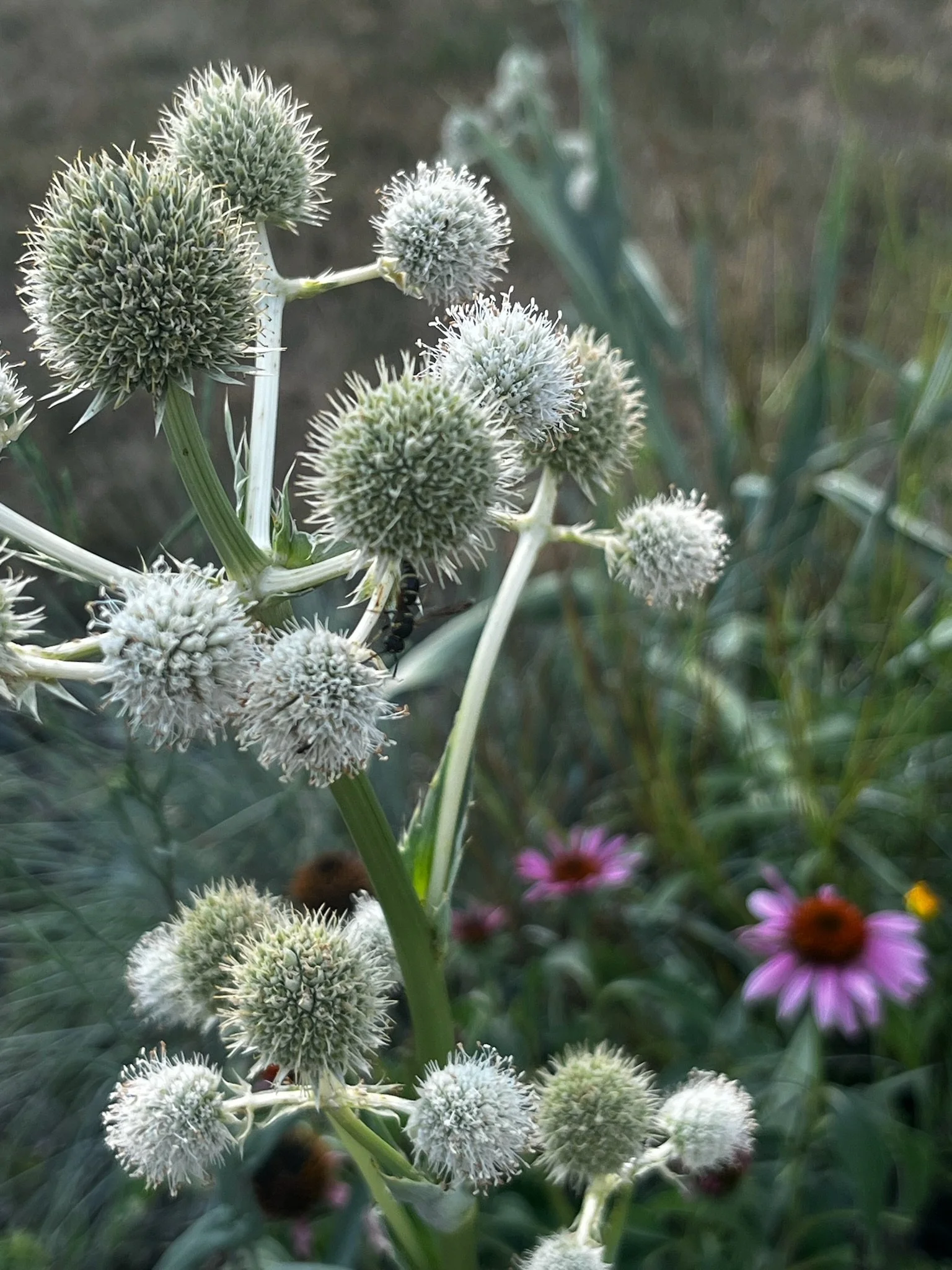 Image 1 of 8
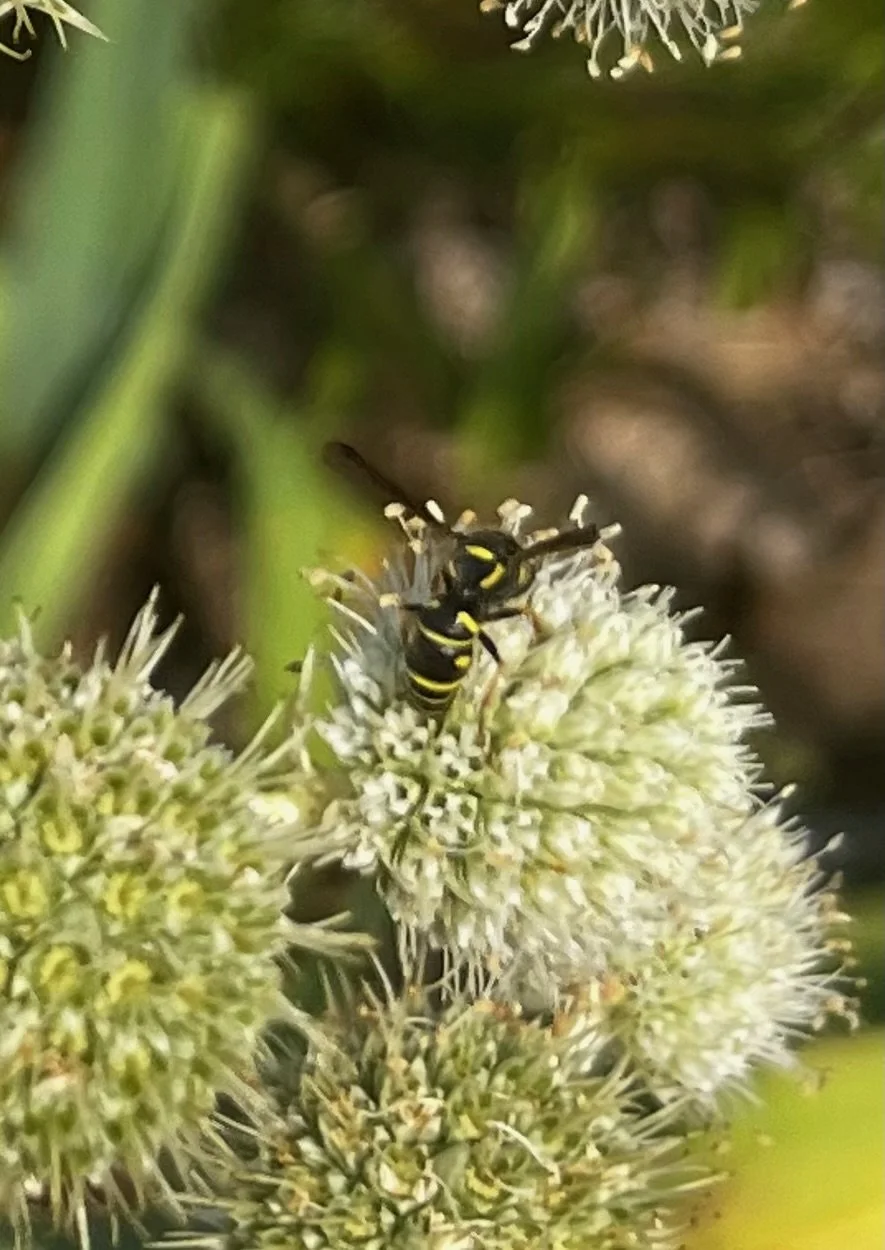 Image 2 of 8
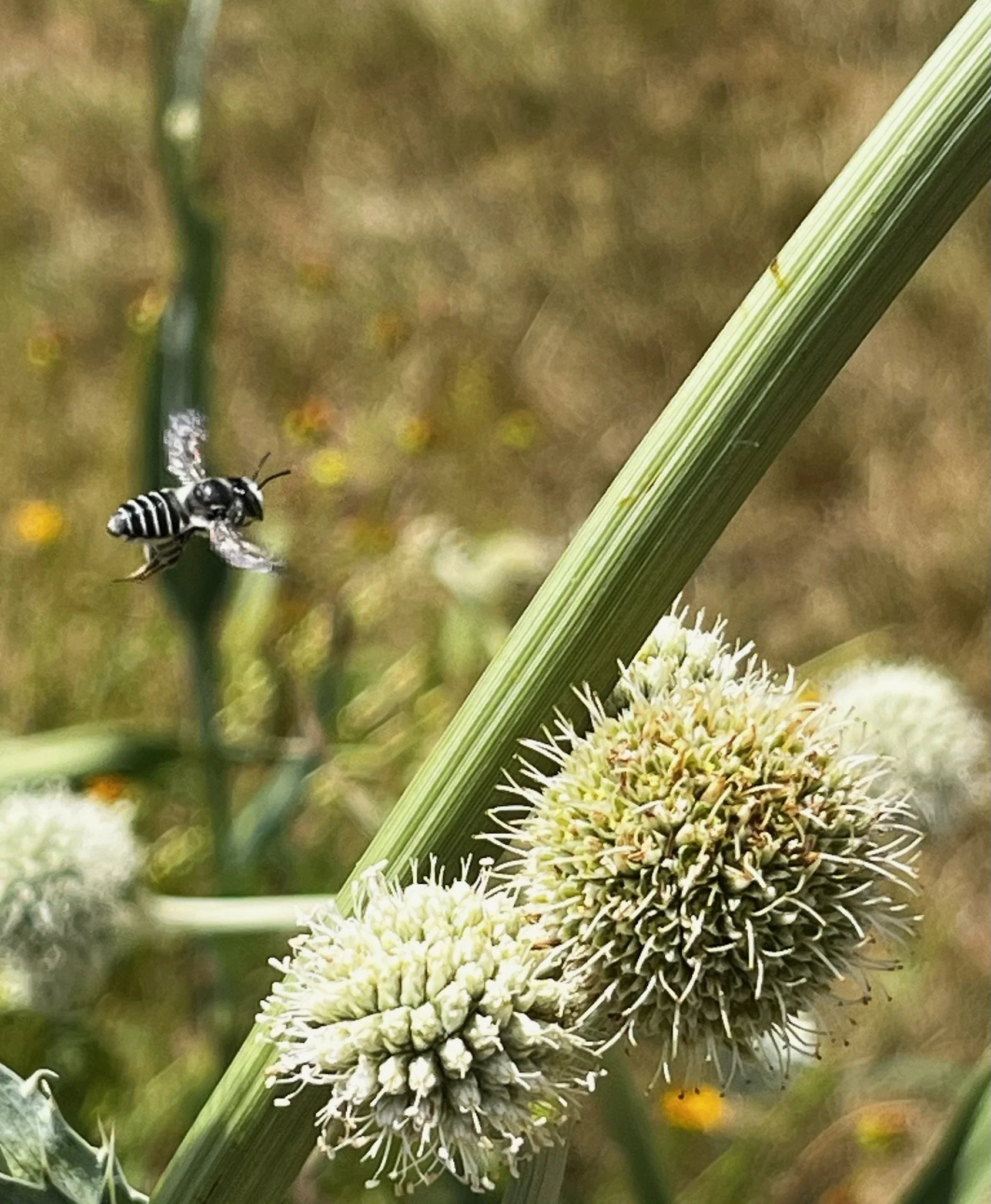 Image 3 of 8
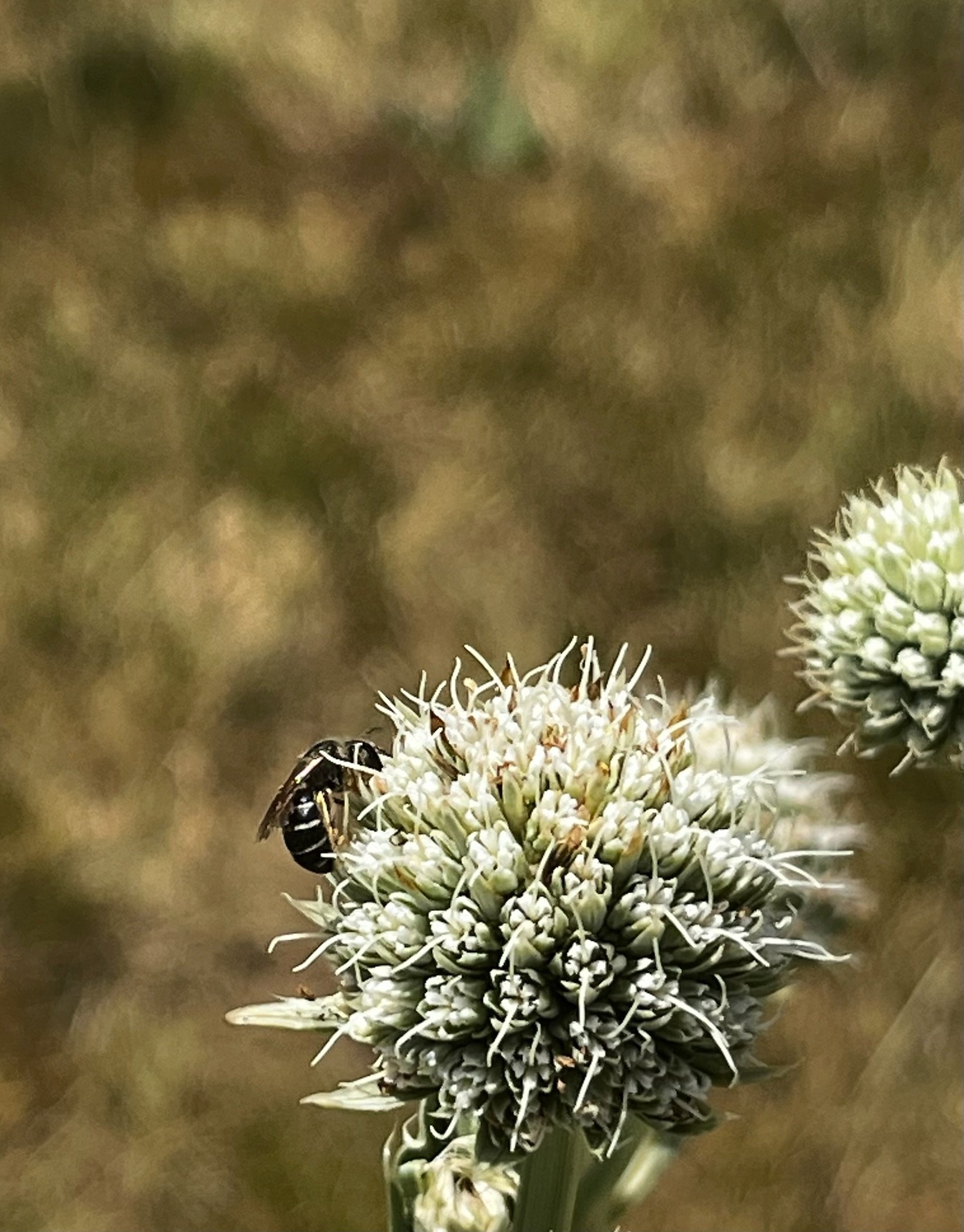 Image 4 of 8
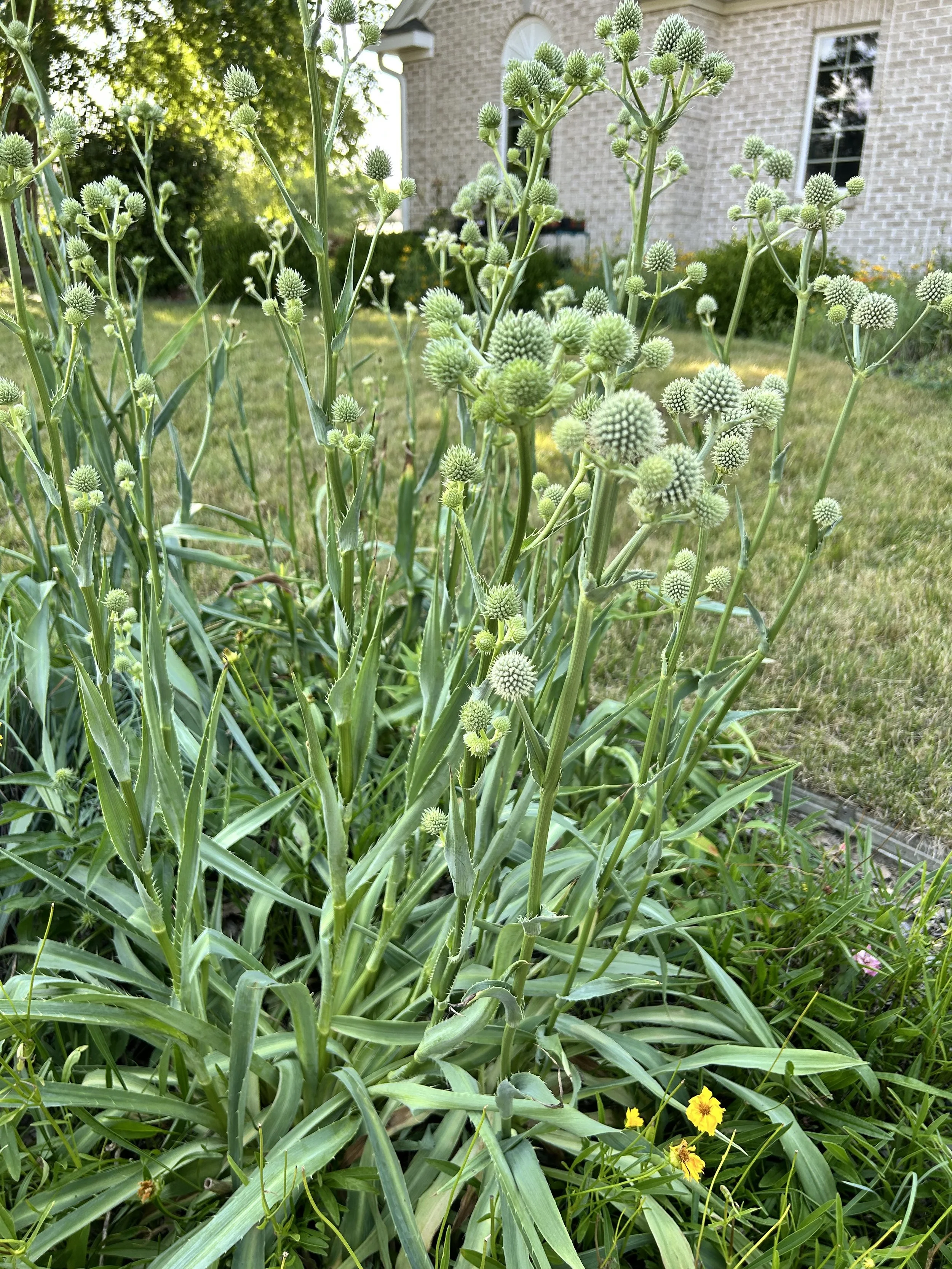 Image 5 of 8
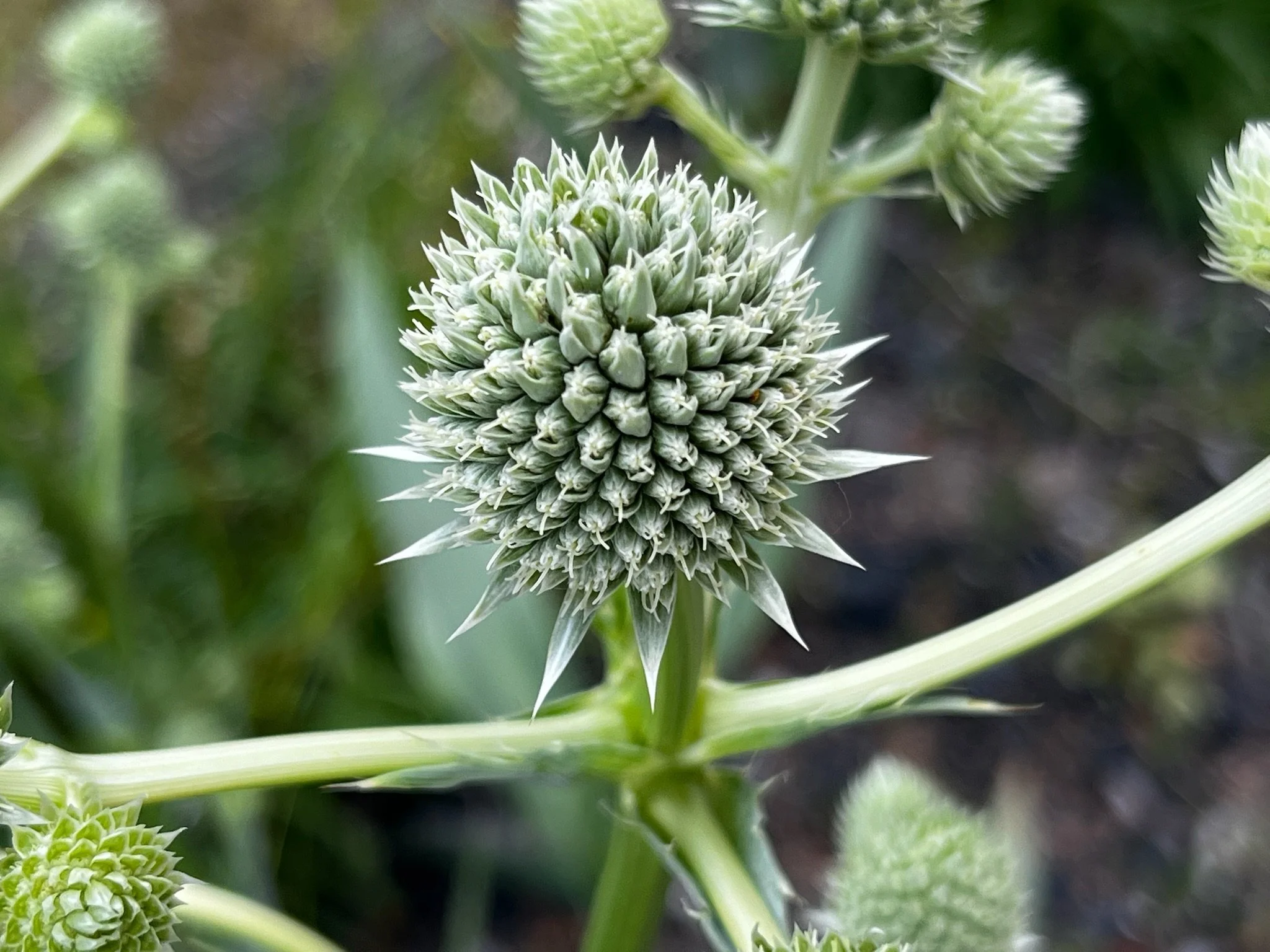 Image 6 of 8
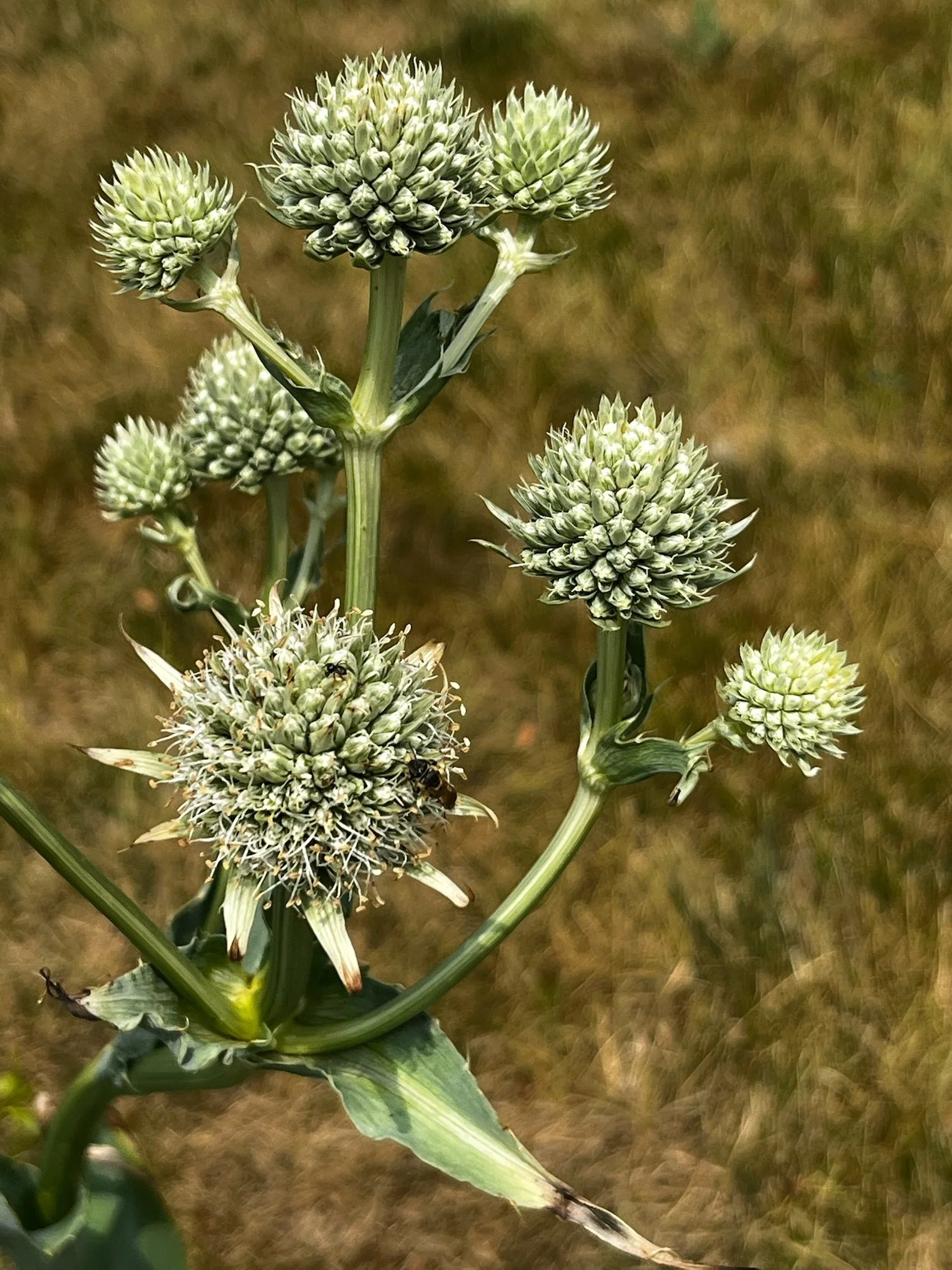 Image 7 of 8
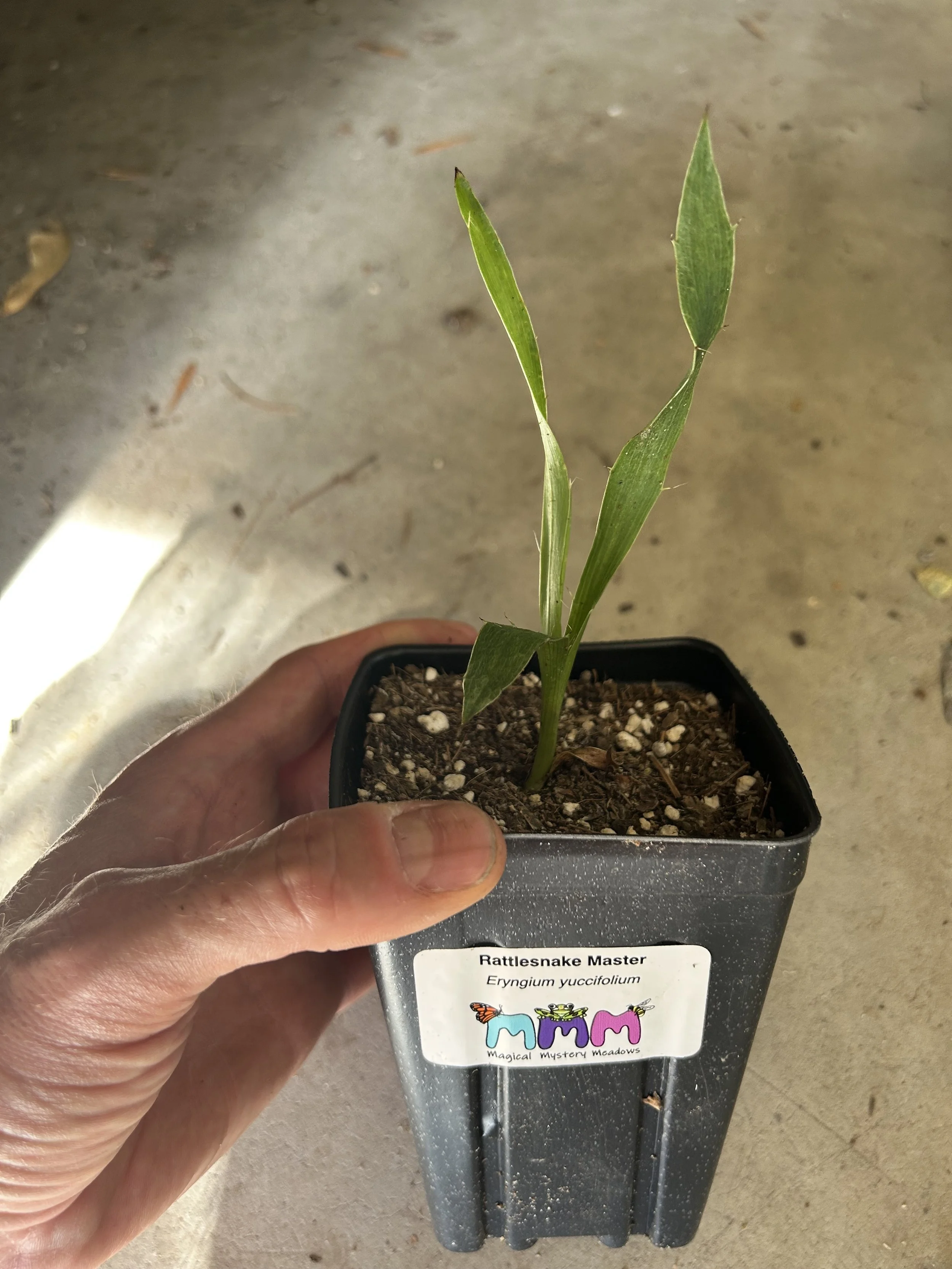 Image 8 of 8


![Butterfly [milk]weed - Asclepias tuberosa (qt size pot)](https://images.squarespace-cdn.com/content/v1/67d19d277a2c92205f41fcc4/94680a14-229c-4cc2-ac11-5a032ab3d6de/IMG_8174.jpeg)