 Image 1 of 3
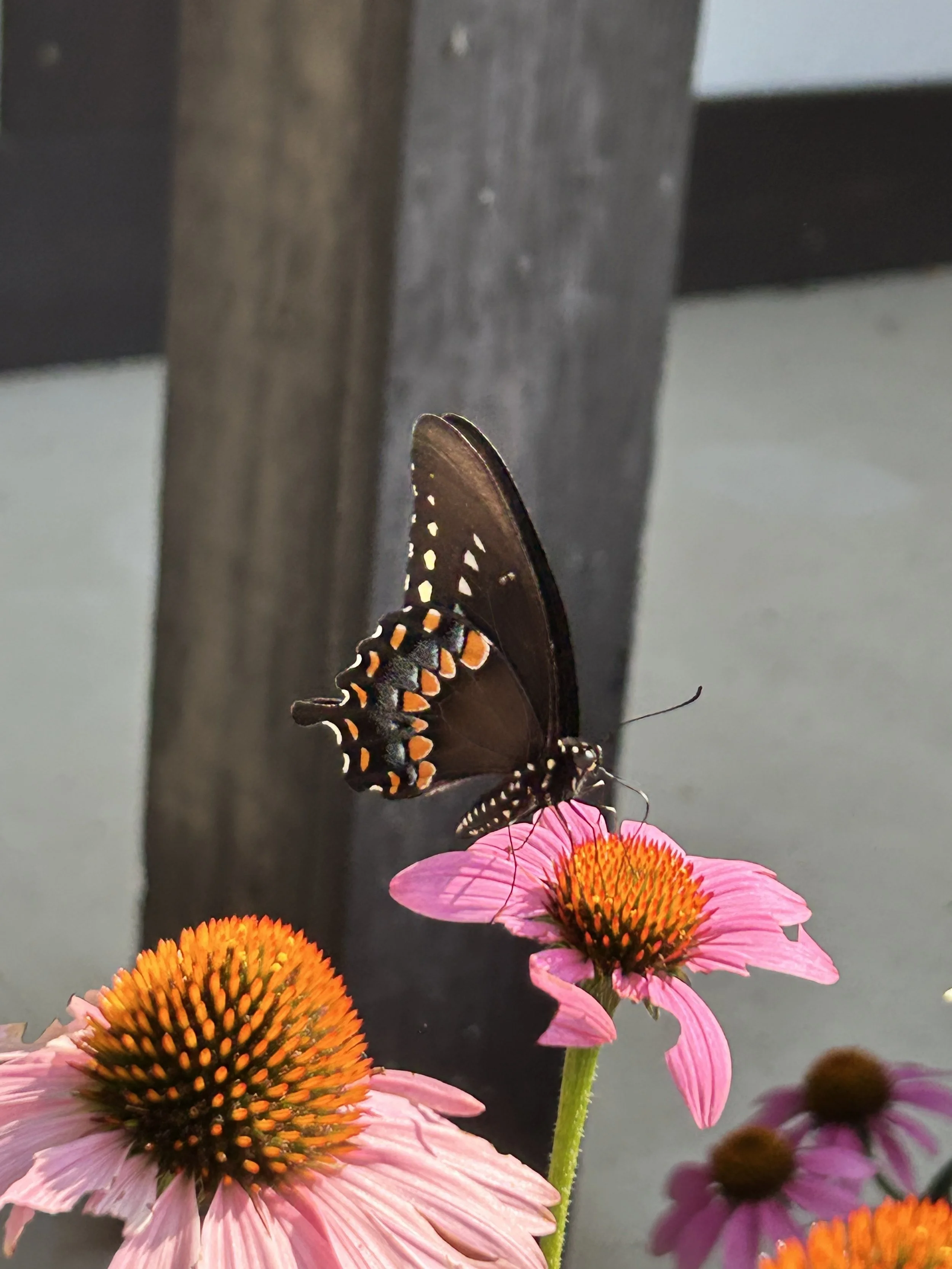 Image 2 of 3
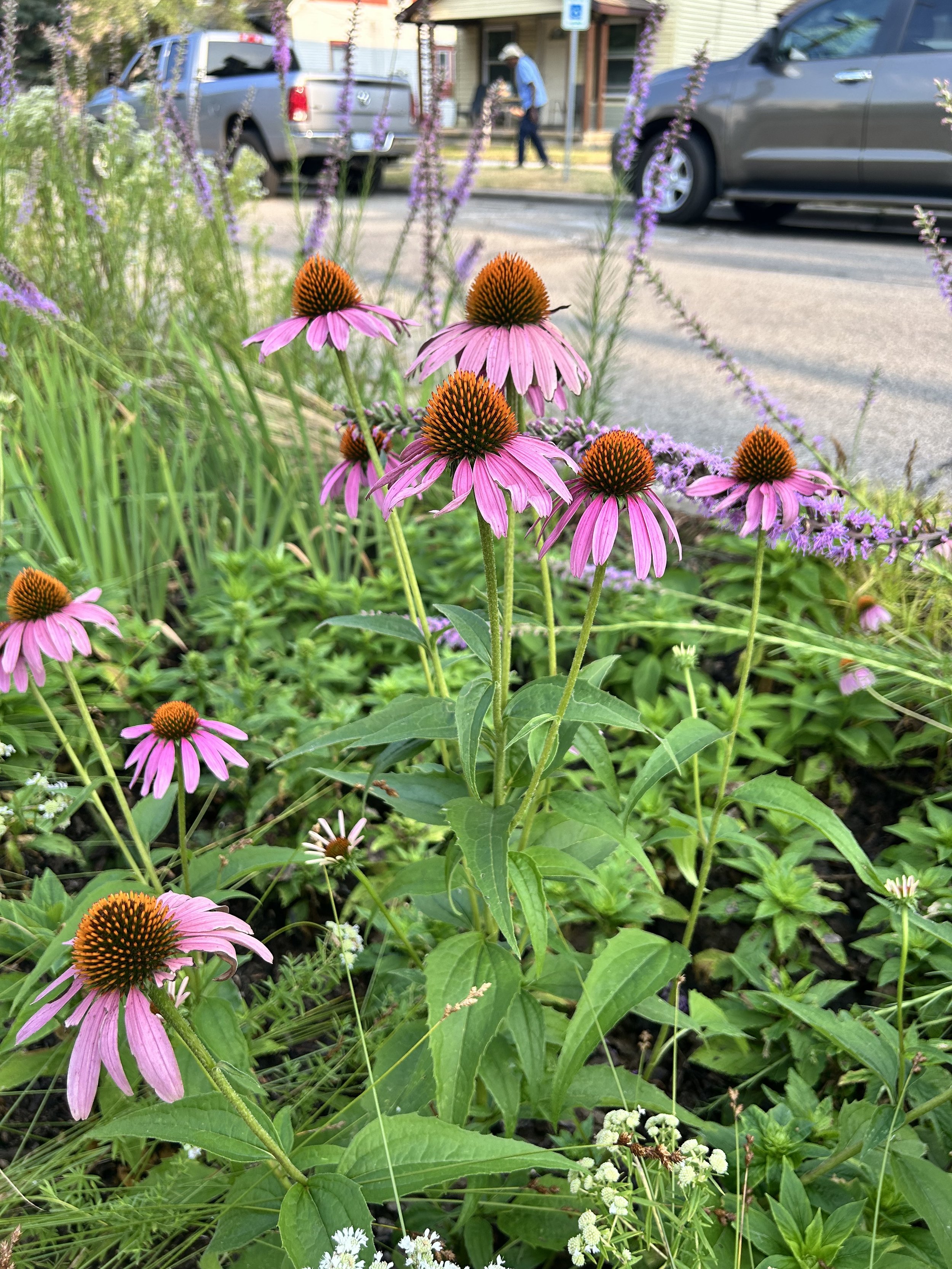 Image 3 of 3
Though this familiar garden plant is considered native to Michigan, it is believed to be extirpated; it no longer naturally occurs in the state. Echinacea purpurea is a classic showy garden plant which has both aesthetic appeal and pollinator benefits. Blooming through the summer, Purple coneflower stands tall and is well behaved, with a fibrous root system and short rhizomes that allow the plant to fill in a space a bit over time. If deadheaded, the plant sometimes produces a second bloom in fall.
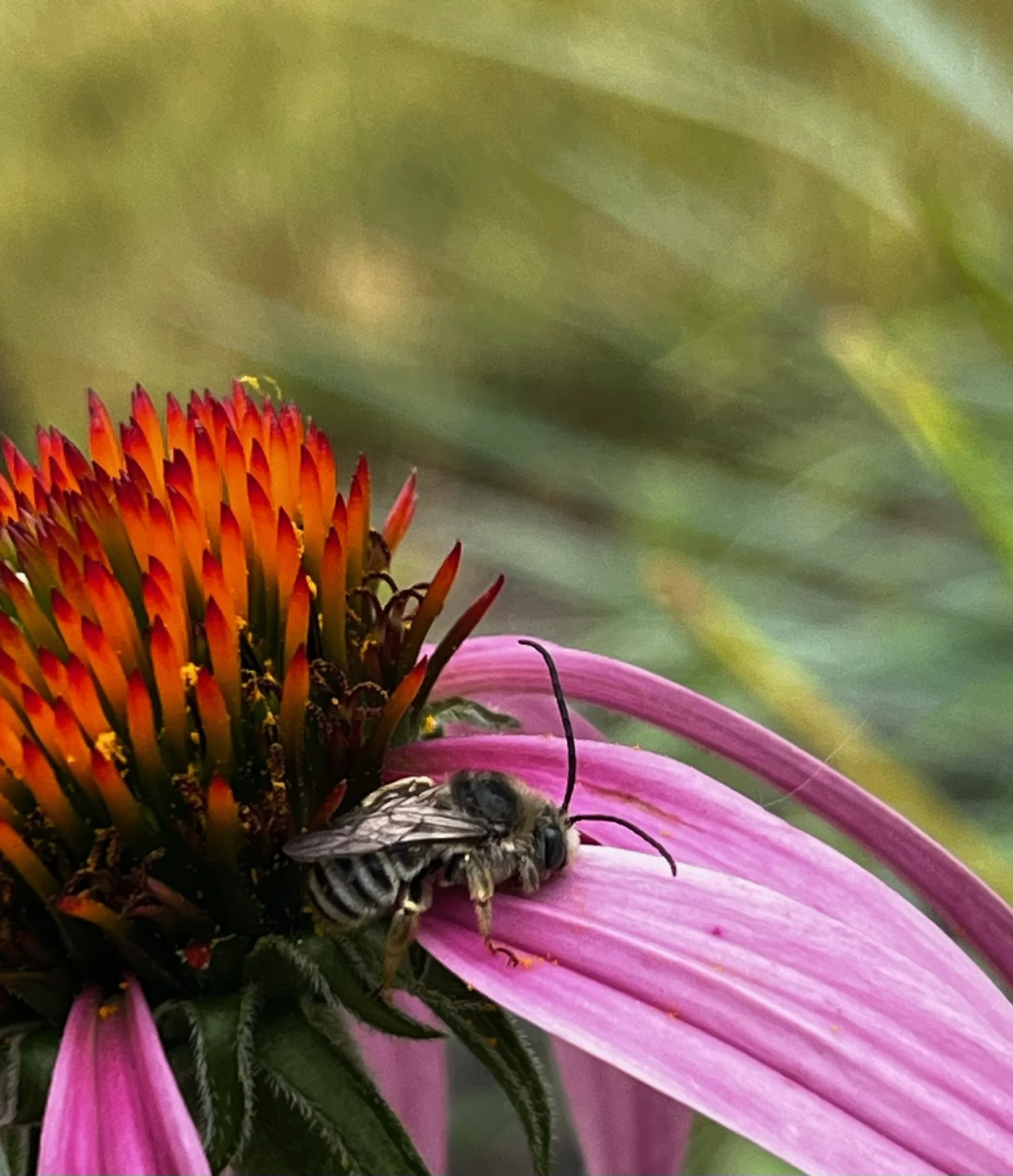
This species offers high wildlife value in that its flowers are abundant in easily-accessible nectar, and so it is visited by a variety of bees, butterflies, and hummingbirds. Its seeds are a winter food source for granivorous birds, and are well-loved by goldfinches especially. In addition, the plant is a larval host for several butterflies and moths, including the Silvery Checkerspot.
Native Americans had many uses for this plant, from treatment of coughs to gonorrhea. It is still used today in medicine, as it is believed to promote immune system health. Tablets are available in pharmacies and health food stores, but those who have the plant in their gardens can harvest and dry flowers and use them in herbal tea.
Do note that cultivars sold in garden stores tend to be far less hardy, and often do not serve pollinators as well. Choose native wild type!
Sun: full - part sun
Height: 3-4’
Flower color: red - purple
Bloom time: June - Sept
Wetness: medium - dry
Soil: thrives in fertile loam, but can handle some gravel, clay, and sand. Drought tolerant once established.
Though this familiar garden plant is considered native to Michigan, it is believed to be extirpated; it no longer naturally occurs in the state. Echinacea purpurea is a classic showy garden plant which has both aesthetic appeal and pollinator benefits. Blooming through the summer, Purple coneflower stands tall and is well behaved, with a fibrous root system and short rhizomes that allow the plant to fill in a space a bit over time. If deadheaded, the plant sometimes produces a second bloom in fall.
This species offers high wildlife value in that its flowers are abundant in easily-accessible nectar, and so it is visited by a variety of bees, butterflies, and hummingbirds. Its seeds are a winter food source for granivorous birds, and are well-loved by goldfinches especially. In addition, the plant is a larval host for several butterflies and moths, including the Silvery Checkerspot.
Native Americans had many uses for this plant, from treatment of coughs to gonorrhea. It is still used today in medicine, as it is believed to promote immune system health. Tablets are available in pharmacies and health food stores, but those who have the plant in their gardens can harvest and dry flowers and use them in herbal tea.
Do note that cultivars sold in garden stores tend to be far less hardy, and often do not serve pollinators as well. Choose native wild type!
Sun: full - part sun
Height: 3-4’
Flower color: red - purple
Bloom time: June - Sept
Wetness: medium - dry
Soil: thrives in fertile loam, but can handle some gravel, clay, and sand. Drought tolerant once established.