
 Image 1 of 4
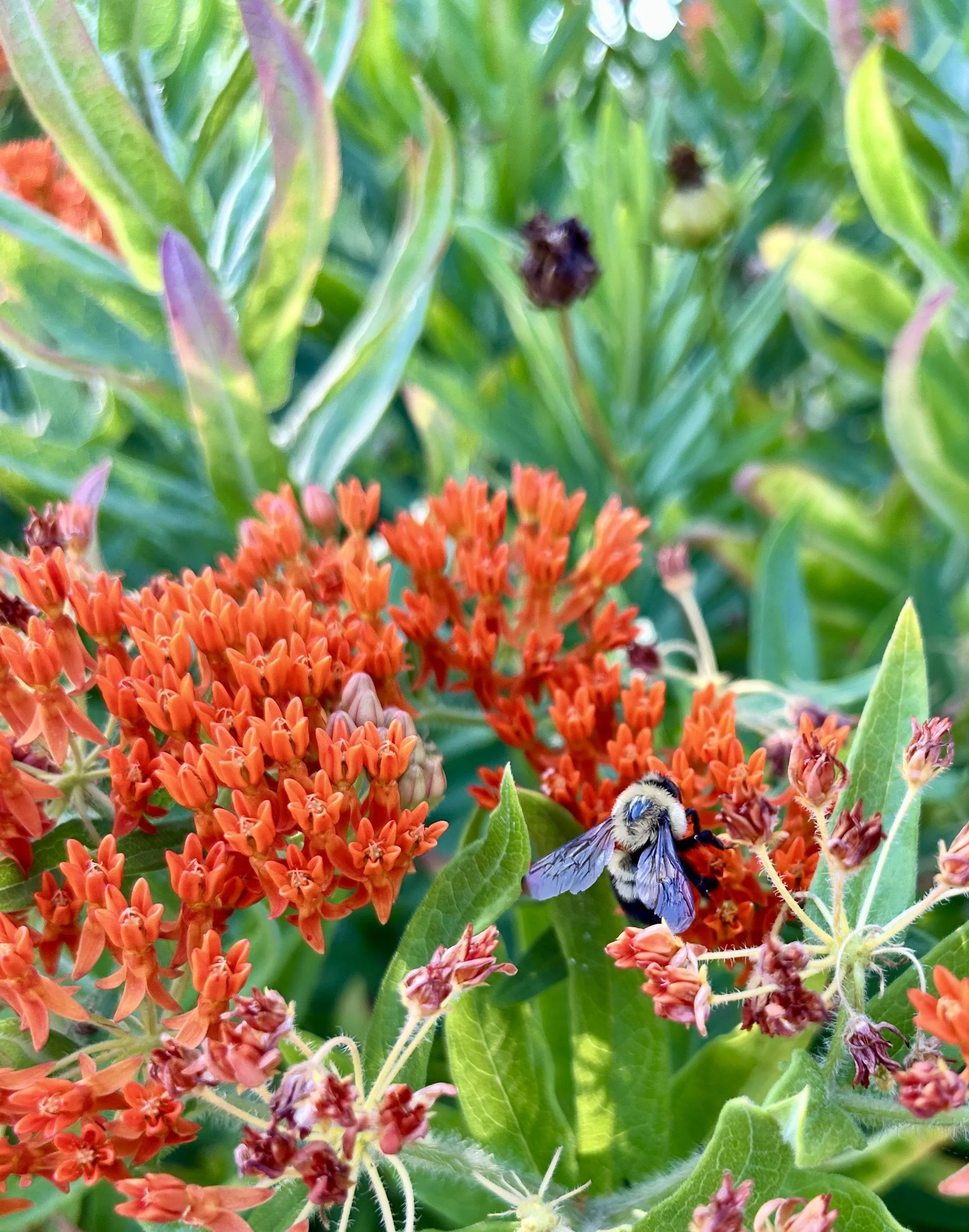 Image 2 of 4
 Image 3 of 4
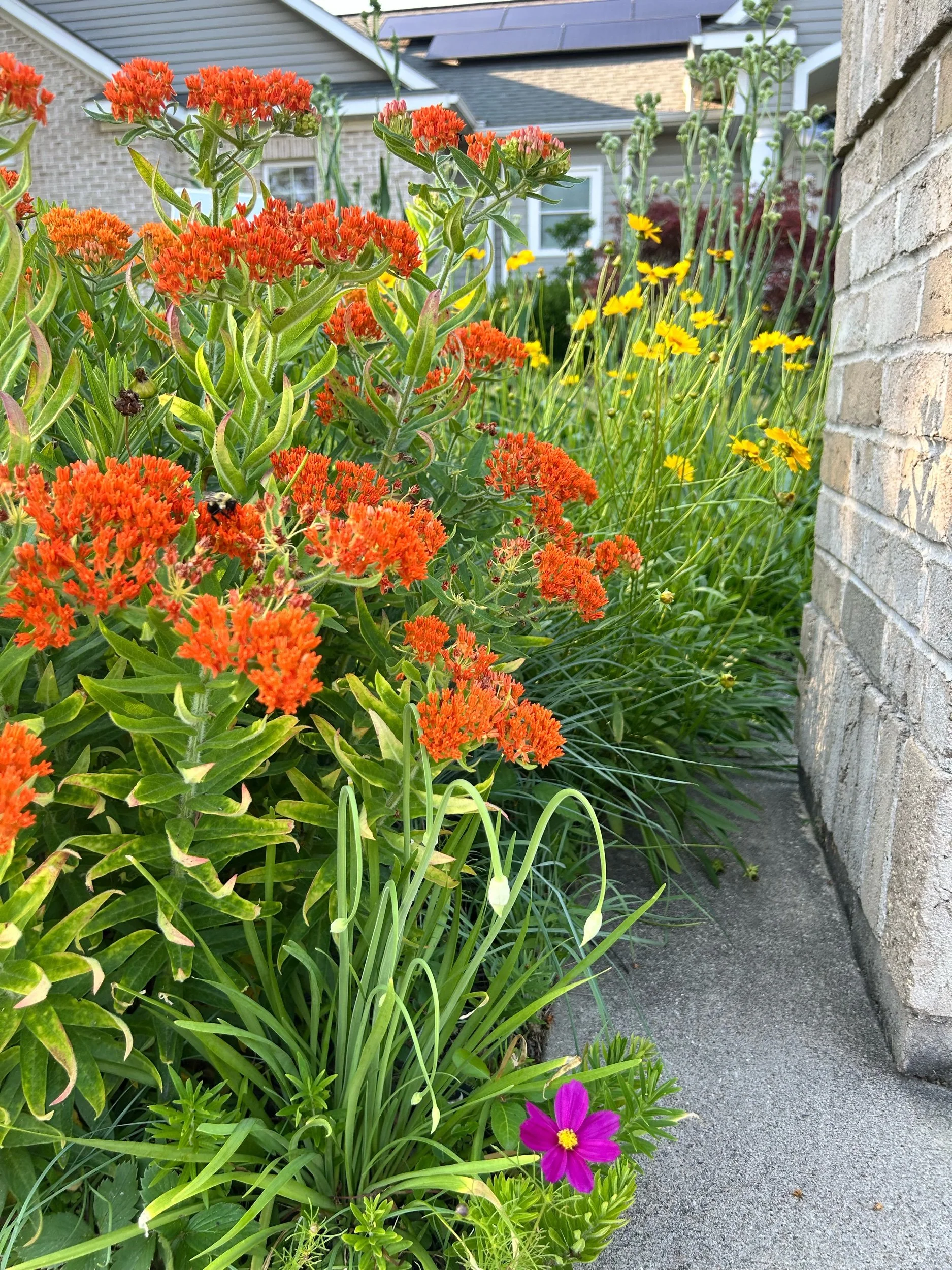 Image 4 of 4
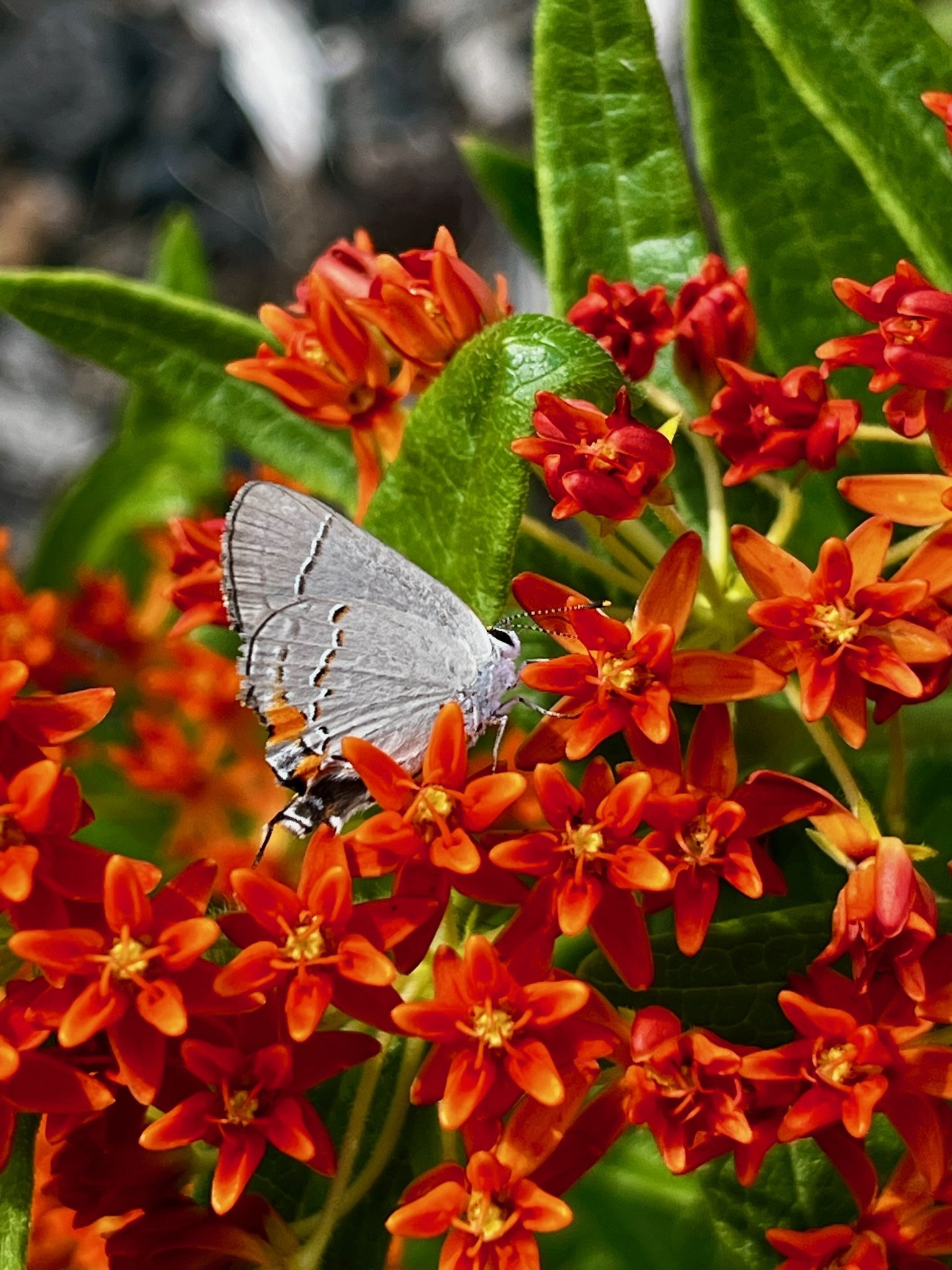
One of the most coveted milkweeds (Asclepias spp.) for its tight form, rare (and breathtakingly beautiful) orange flowers, and well behaved habit; this very robust plant thrives in full sun and medium - dry, well-drained soil. As all milkweeds, it can host Monarch, but this species is somewhat unique in its ability to attract hummingbirds as well. Maybe it’s the orange color? Perhaps unfortunately, the plant also seems to attract aphids more readily than most milkweeds. This is a minor inconvenience, though, and it is recommended to let them be. The aphids serve as food for lacewings, ladybugs, and other beneficial garden predators.
Wildlife value extends beyond Monarchs, as the flowers and leaves provide food for at least a dozen Lepidoptera species, including Queens and Milkweed tiger moths, as well as milkweed bugs and beetles, and various bee species such as bumblebees and sweat bees.
As previously mentioned, this species is not aggressive like its cousin, Common Milkweed. The main reason for this is that Butterfly weed has a tap root instead of a rhizomatous root system. Interestingly, the roots are known to have been chewed by Native Americans as a cure for pulmonary conditions such as bronchitis and pleurisy (which earned this plant the alternative common name, Pleurisy root). Another nice feature of Butterfly weed is the tendency to bloom in just its second year (and sometimes even in its first year) of growth from seed. We like to plant it with Little bluestem, Wild Petunia, Blazing star, Purple prairie clover, and/or Prairie phlox.
Sun: full - partial
Height: 1 -3’
Flower color: orange
Bloom time: June - Aug
Wetness: medium - dry
Root system: taproot
Soil: sandy, gravely, poor soil
One of the most coveted milkweeds (Asclepias spp.) for its tight form, rare (and breathtakingly beautiful) orange flowers, and well behaved habit; this very robust plant thrives in full sun and medium - dry, well-drained soil. As all milkweeds, it can host Monarch, but this species is somewhat unique in its ability to attract hummingbirds as well. Maybe it’s the orange color? Perhaps unfortunately, the plant also seems to attract aphids more readily than most milkweeds. This is a minor inconvenience, though, and it is recommended to let them be. The aphids serve as food for lacewings, ladybugs, and other beneficial garden predators.
Wildlife value extends beyond Monarchs, as the flowers and leaves provide food for at least a dozen Lepidoptera species, including Queens and Milkweed tiger moths, as well as milkweed bugs and beetles, and various bee species such as bumblebees and sweat bees.
As previously mentioned, this species is not aggressive like its cousin, Common Milkweed. The main reason for this is that Butterfly weed has a tap root instead of a rhizomatous root system. Interestingly, the roots are known to have been chewed by Native Americans as a cure for pulmonary conditions such as bronchitis and pleurisy (which earned this plant the alternative common name, Pleurisy root). Another nice feature of Butterfly weed is the tendency to bloom in just its second year (and sometimes even in its first year) of growth from seed. We like to plant it with Little bluestem, Wild Petunia, Blazing star, Purple prairie clover, and/or Prairie phlox.
Sun: full - partial
Height: 1 -3’
Flower color: orange
Bloom time: June - Aug
Wetness: medium - dry
Root system: taproot
Soil: sandy, gravely, poor soil