 Image 1 of 5
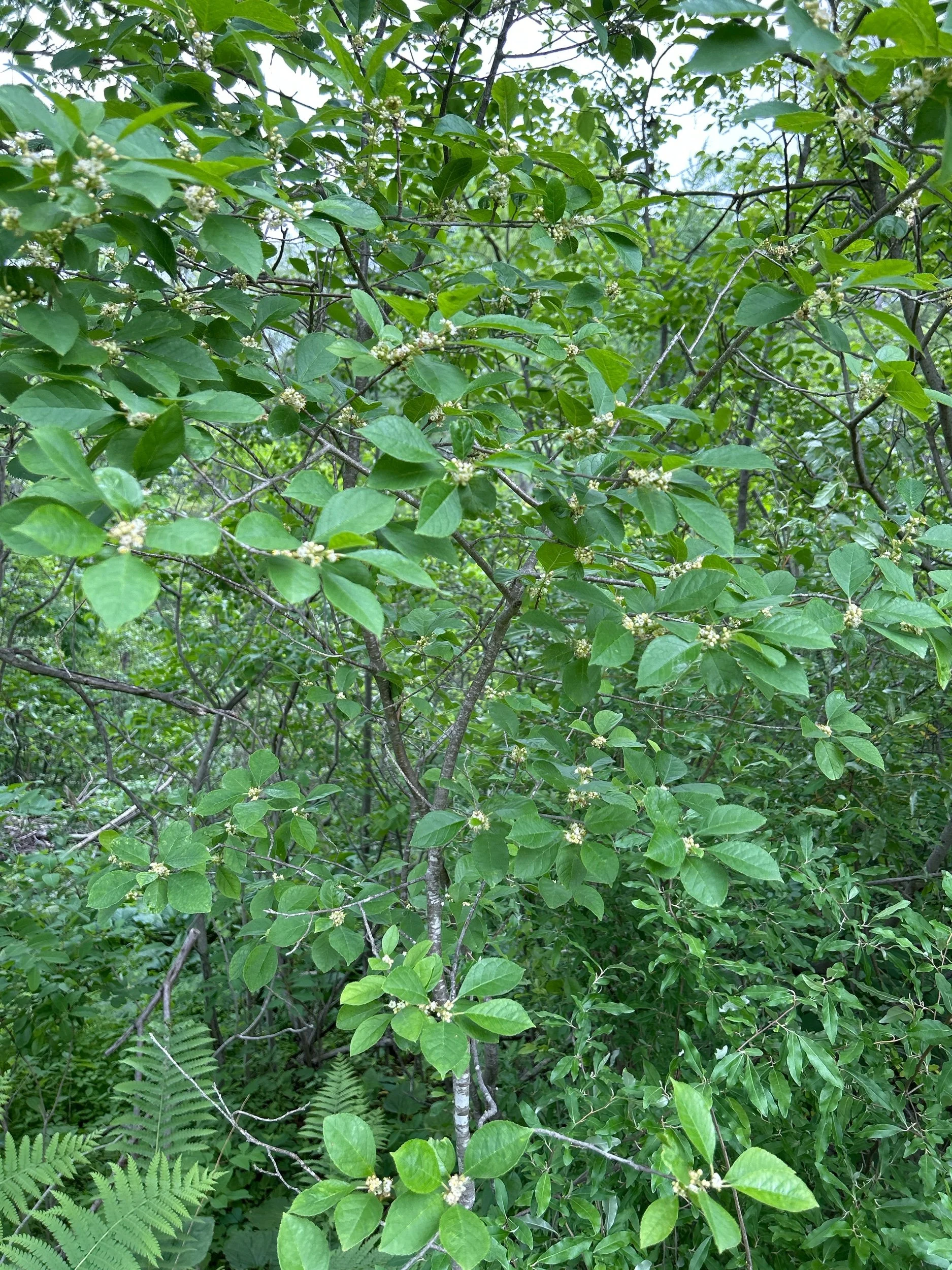 Image 2 of 5
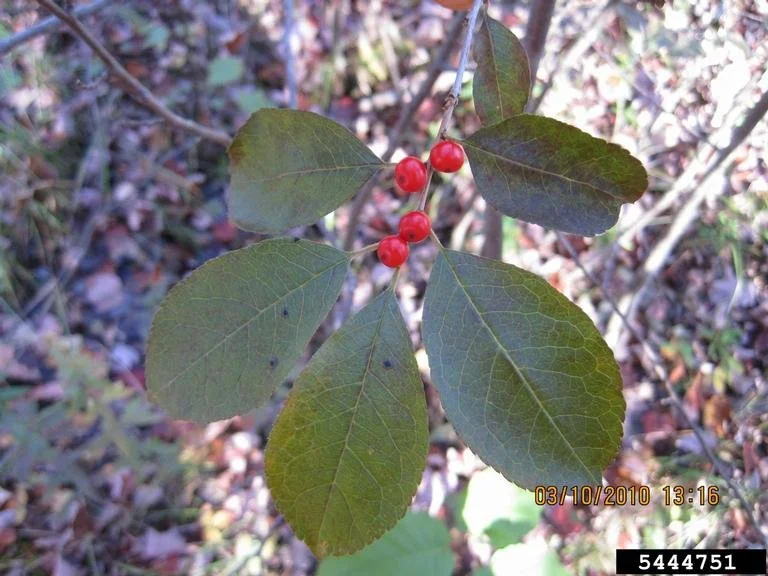 Image 3 of 5
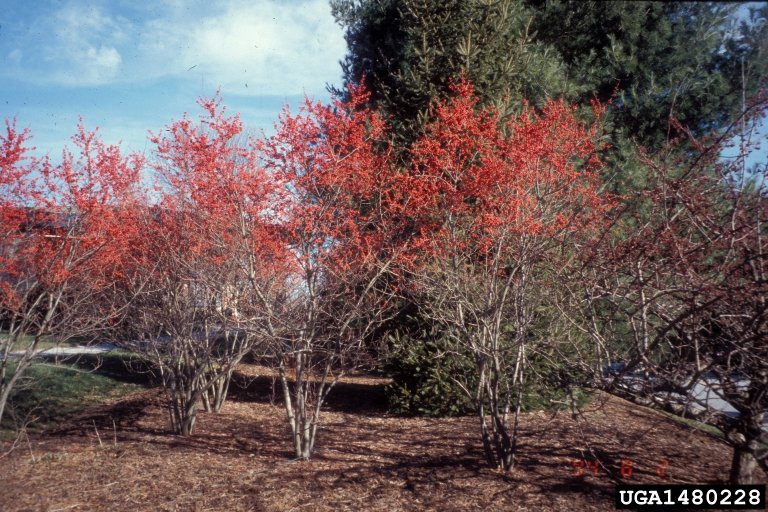 Image 4 of 5
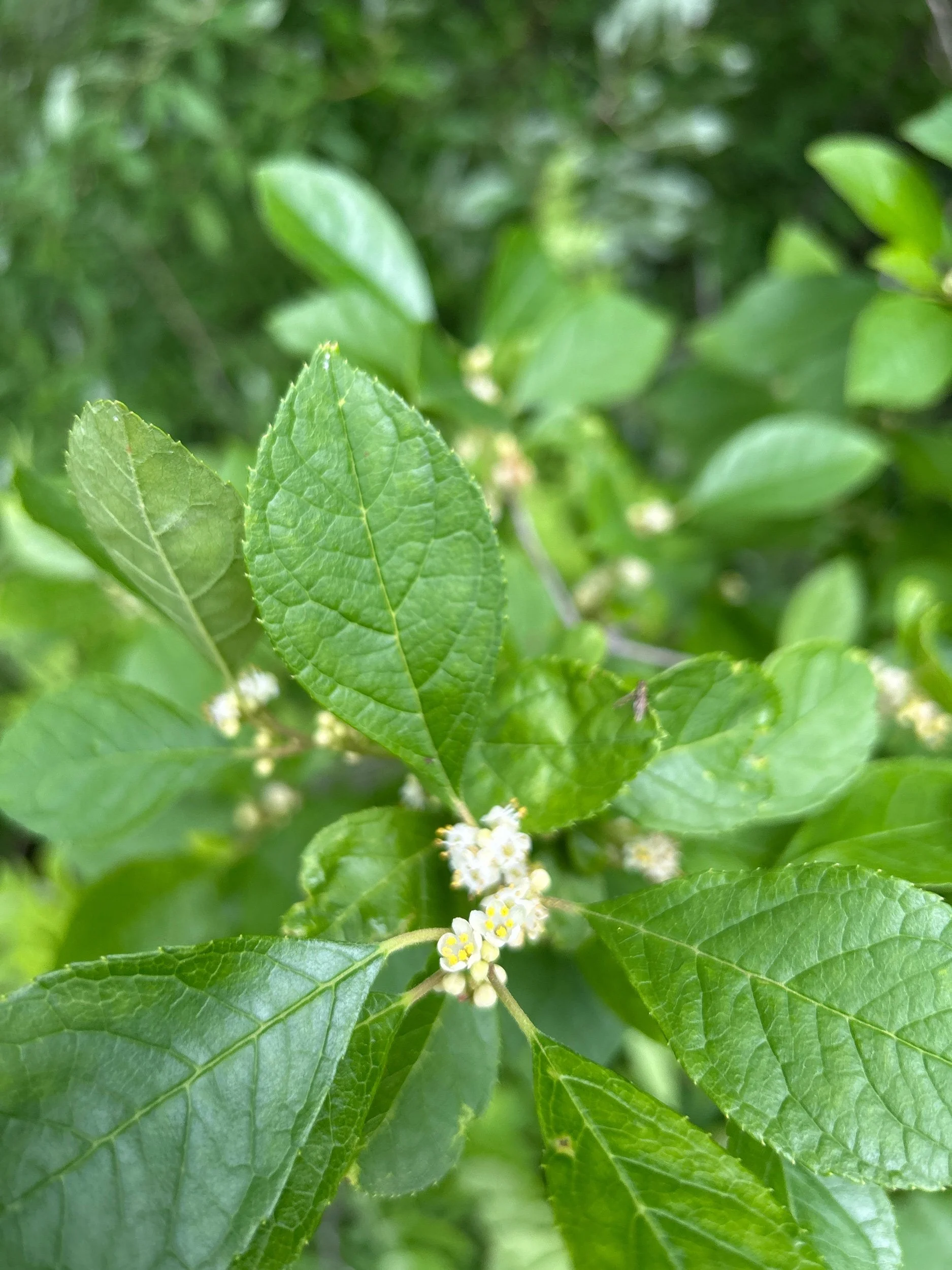 Image 5 of 5
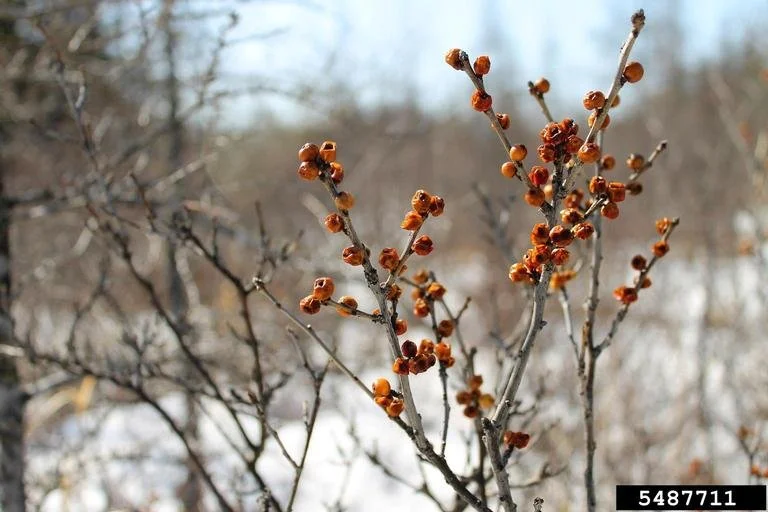
Winterberry holly is a beautiful medium-sized (6-12’) shrub with lovely, bright red berries that whorl around its stems and persist through winter. Ilex verticillata is hardy and robust, growing well in average to wet acidic soils; it is tolerant of both drought and flooding, and can handle soil compaction as well. In wet soils, it often has a suckering habit, so cutting back up to 1/3 of branches each year, starting with older growth, can be good practice. Do note, though, that flowers appear on new growth… prune accordingly. This species is excellent for pond edges, rain gardens, and hedges.
Like most everything we grow at Magical Mystery Meadows, Ilex verticillata has very high wildlife value. At least 30 species of butterflies and moths use this deciduous holly as a host plant. In June, a variety of native bees including bumblebees, miner bees, sweat bees, and plasterer bees seek out the nectar of female plants and the pollen of male plants. 48 different bird species - bluebirds, robins, waxwings and many more - have been observed eating the berries, which are a critical late winter high fat food source.
Be sure to plant three (3) or more in close proximity to each other in order to ensure berry production from cross-pollination, as these plants are dioecious - individuals are either male or female. You don’t want to miss out on the stunning red berries, which offer striking contrast against a winter snow backdrop.
The product for sale is a small second year shrub in a 4” x 4” x 8” deep mini tree pot. Price will increase with size/maturity.
Sun: full sun - shade
Height: 6-12’
Flower color: white
Bloom time: June-July
Wetness: medium - wet
Soil: prefers acidic loamy soils with some sand and/or clay. Needs some drainage, but can handle flooding.
Photo credits: Rob Routledge, Sault College, Bugwood.org and Richard Webb, Bugwood.org
Winterberry holly is a beautiful medium-sized (6-12’) shrub with lovely, bright red berries that whorl around its stems and persist through winter. Ilex verticillata is hardy and robust, growing well in average to wet acidic soils; it is tolerant of both drought and flooding, and can handle soil compaction as well. In wet soils, it often has a suckering habit, so cutting back up to 1/3 of branches each year, starting with older growth, can be good practice. Do note, though, that flowers appear on new growth… prune accordingly. This species is excellent for pond edges, rain gardens, and hedges.
Like most everything we grow at Magical Mystery Meadows, Ilex verticillata has very high wildlife value. At least 30 species of butterflies and moths use this deciduous holly as a host plant. In June, a variety of native bees including bumblebees, miner bees, sweat bees, and plasterer bees seek out the nectar of female plants and the pollen of male plants. 48 different bird species - bluebirds, robins, waxwings and many more - have been observed eating the berries, which are a critical late winter high fat food source.
Be sure to plant three (3) or more in close proximity to each other in order to ensure berry production from cross-pollination, as these plants are dioecious - individuals are either male or female. You don’t want to miss out on the stunning red berries, which offer striking contrast against a winter snow backdrop.
The product for sale is a small second year shrub in a 4” x 4” x 8” deep mini tree pot. Price will increase with size/maturity.
Sun: full sun - shade
Height: 6-12’
Flower color: white
Bloom time: June-July
Wetness: medium - wet
Soil: prefers acidic loamy soils with some sand and/or clay. Needs some drainage, but can handle flooding.
Photo credits: Rob Routledge, Sault College, Bugwood.org and Richard Webb, Bugwood.org