 Image 1 of 2
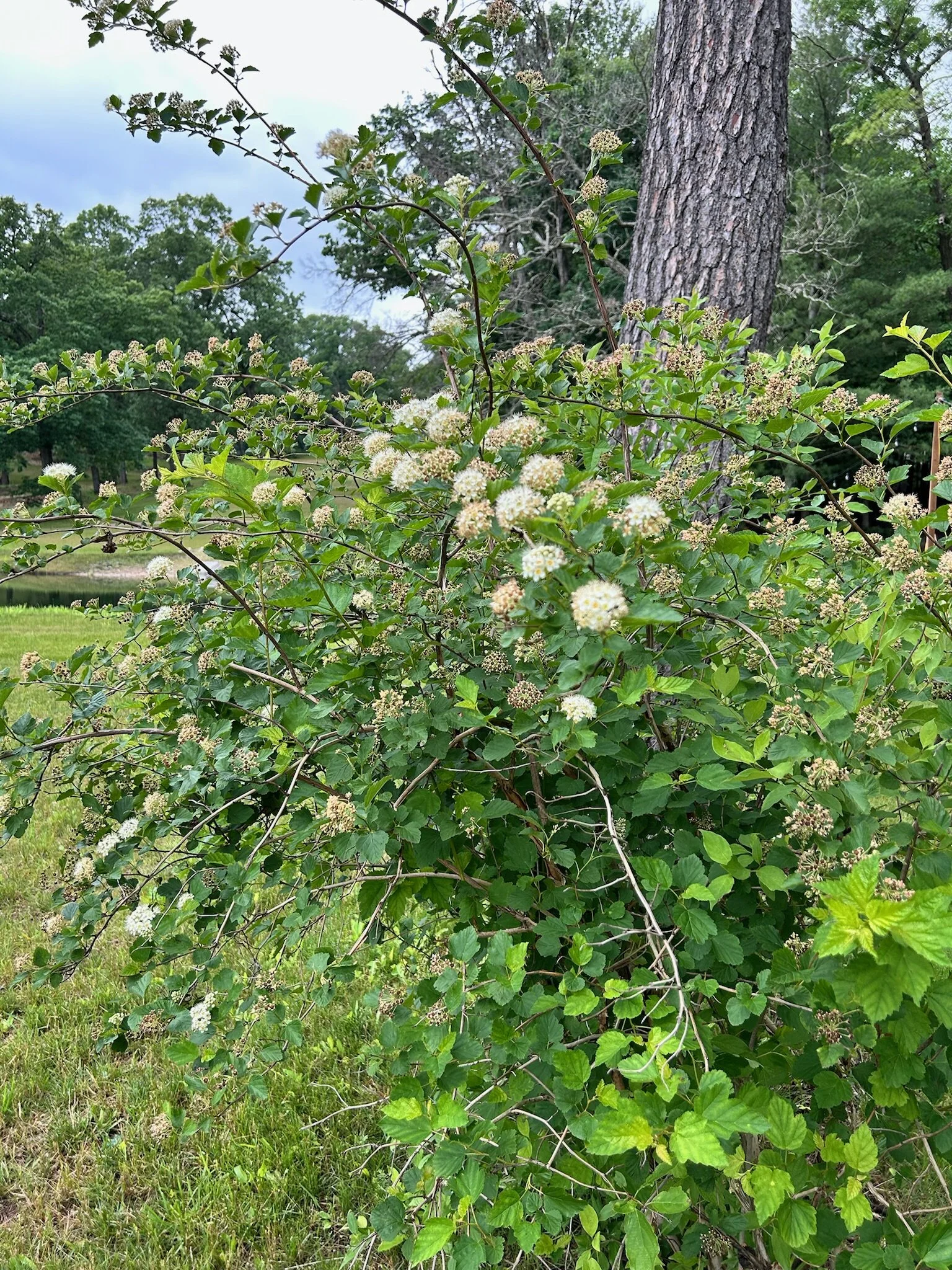 Image 2 of 2
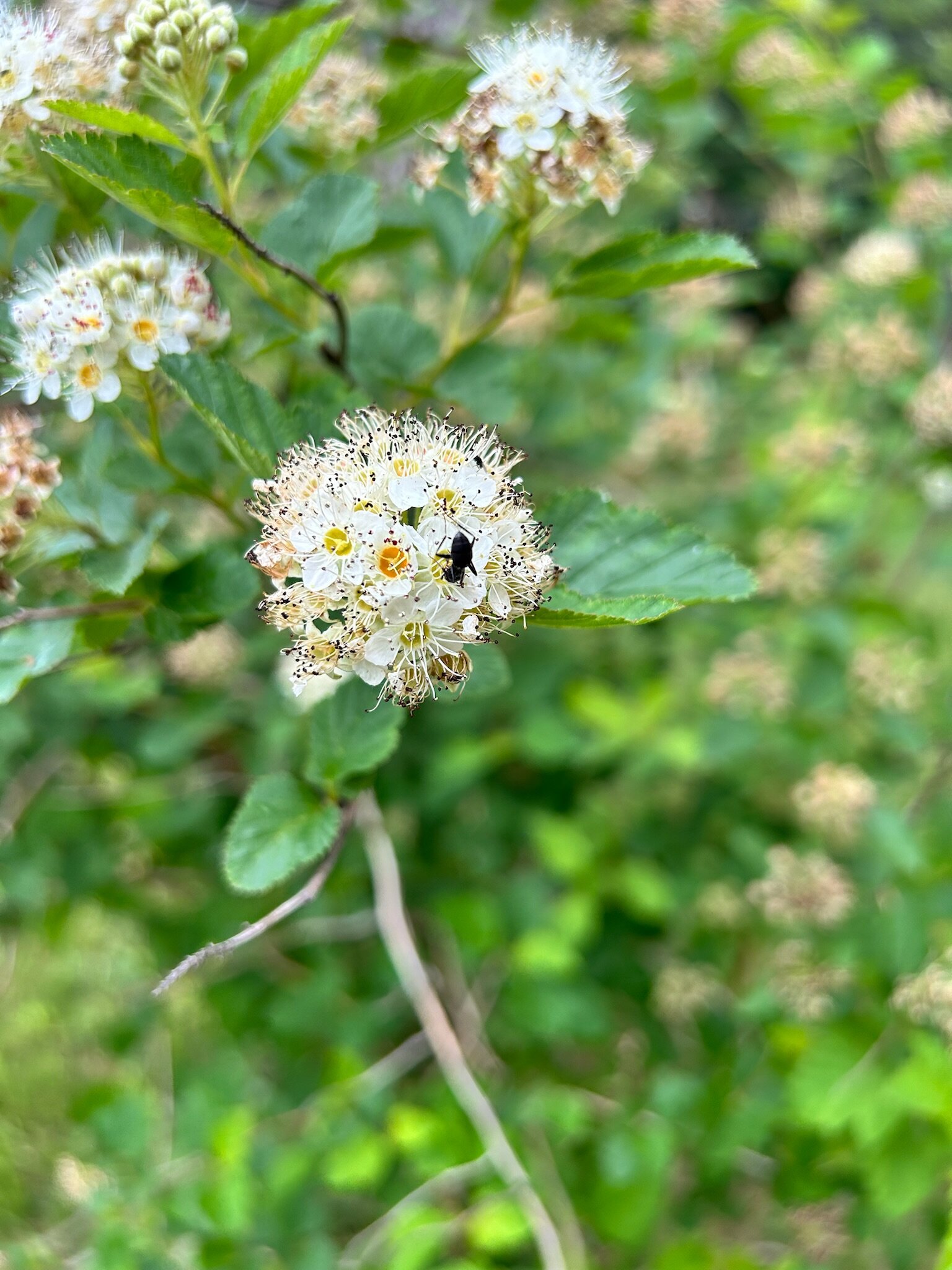
Common Ninebark is, without a doubt, one of the most elegant Michigan native shrubs … so much so, that the large nursery trade commonly grows and distributes this species. That said, the most commonly sold varieties are cultivars with differing leaf color, and they are believed to be far less valuable to wildlife because of this. The common name “Ninebark” refers to the bark’s interesting peeling habit, creating many papery layers (I guess someone counted nine?). The bark is especially pretty in winter time contrasted against the snow. In spring, many large white-pink globular hydrangea-like flowers are a show stopper. In summer, the full green foliage fills any space, and in fall, the green turns red-orange, and the flowers have become berries. This is truly a four season plant!
Physocarpus opulifolius is highly appealing to wildlife as well. This species is a host plant for approximately 50 Lepidoptera, including some of the coolest moths - the Blinded sphinx, Cecropia silk moth, and the Io moth (aka peacock moth). Of course, these many caterpillars feed many birds, especially baby birds, and the small fruits in fall-winter feed many adult bird species, including woodpeckers and jays. Finally, the plentiful nectar in the flowers feeds butterflies, moths, native bees, and other insects.
This shrub is very fast-growing, and can fill a hedge or a specimen space quickly. It is highly tolerant of pruning, so feel free to shape it as you like. Note that if you do not prune, the shrub will form a quite wide and sprawling shape, so be sure to give it room.
Sun: full - partial sun
Height: 5 - 10’
Flower color: white - yellow - pink
Bloom time: May - June
Wetness: medium-dry - medium-wet
Root system: fibrous
Soil: sand, clay, loam
Common Ninebark is, without a doubt, one of the most elegant Michigan native shrubs … so much so, that the large nursery trade commonly grows and distributes this species. That said, the most commonly sold varieties are cultivars with differing leaf color, and they are believed to be far less valuable to wildlife because of this. The common name “Ninebark” refers to the bark’s interesting peeling habit, creating many papery layers (I guess someone counted nine?). The bark is especially pretty in winter time contrasted against the snow. In spring, many large white-pink globular hydrangea-like flowers are a show stopper. In summer, the full green foliage fills any space, and in fall, the green turns red-orange, and the flowers have become berries. This is truly a four season plant!
Physocarpus opulifolius is highly appealing to wildlife as well. This species is a host plant for approximately 50 Lepidoptera, including some of the coolest moths - the Blinded sphinx, Cecropia silk moth, and the Io moth (aka peacock moth). Of course, these many caterpillars feed many birds, especially baby birds, and the small fruits in fall-winter feed many adult bird species, including woodpeckers and jays. Finally, the plentiful nectar in the flowers feeds butterflies, moths, native bees, and other insects.
This shrub is very fast-growing, and can fill a hedge or a specimen space quickly. It is highly tolerant of pruning, so feel free to shape it as you like. Note that if you do not prune, the shrub will form a quite wide and sprawling shape, so be sure to give it room.
Sun: full - partial sun
Height: 5 - 10’
Flower color: white - yellow - pink
Bloom time: May - June
Wetness: medium-dry - medium-wet
Root system: fibrous
Soil: sand, clay, loam