
 Image 1 of 1
Hierochloe odorata or Anthoxanthum nitens (yes, it has two synonymous Latin names, which is rare, but fitting for such a special plant!) is a grass with history as rich as its sweet aroma. Sometimes called “Vanilla sweet grass” or just “Vanilla grass”, Sweet grass is so-named for its sweet vanilla odor. This plant is also called “Holy grass” (the Latin Hieros means “sacred” and chloe means “grass”) because of its sacred status in Native American cultures. For thousands of years, Native Americans from Alaska to the Great Plains have used this plant in smudging ceremonies, which involved burning braided sweet grass, sage, cedar, and tobacco for prayer, purification, and spiritual protection. The grass was harvested, braided, and dried, when coumarin (the compound responsible for the sweet scent) content was highest. Various tribes also used the grass for practical purposes, such as basket weaving.
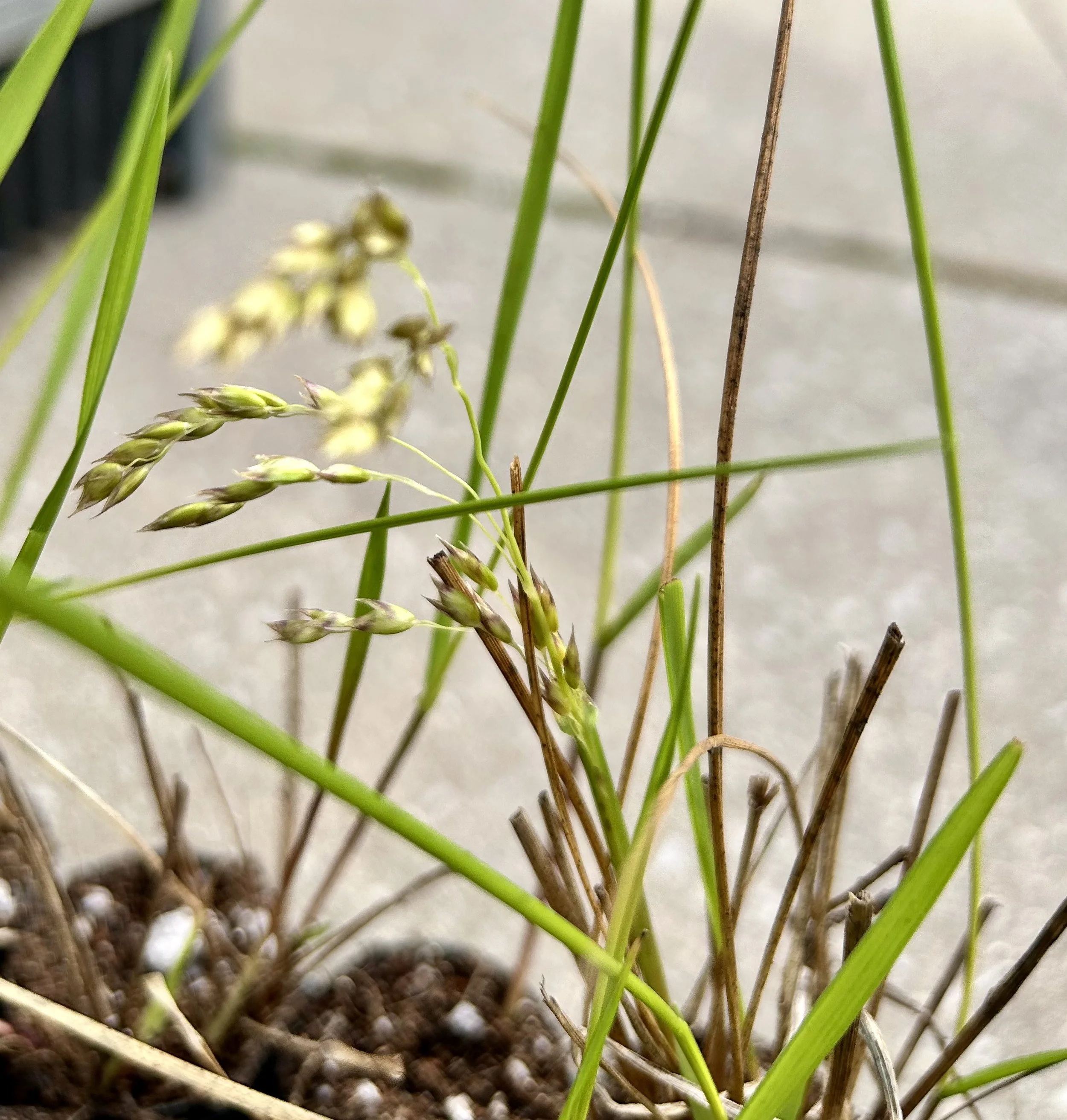
Sweet grass, a perennial cool-season grass, is a fantastic choice for large, wet areas, like pond edges, stream banks, and wet slopes. Its rhizomes are fast-spreading and dense, and help to stabilize shorelines and erosion-prone soil. The flowers and seed heads are showy and beautiful, and the leaves are semi-evergreen, often persisting through winter.
This grass has high wildlife value, offering seeds for various granivorous birds, such as juncos, sparrows, and finches. The grass itself offers suitable nesting habitat for ground-nesting birds, such as the Savannah Sparrows, Song Sparrows, Common yellowthroat, and the near-threatened Bobolink. In the north, moose, caribou, and elk graze on fresh growth in spring. Voles and meadow mice use the dense growth in nesting and general cover and foraging habitat. Though wind-pollinated, its pollen is reported collected by bees, which benefit from the protein. Solitary ground-nesting bees and wasps also utilize dense colonies as shelter for their progeny.
Sun: full
Height: 1-2’
Flower color: green - cream
Bloom time: May - June
Wetness: medium - wet (tolerates wet feet)
Root system: rhizomatous
Soil: clay, loam, sand
Hierochloe odorata or Anthoxanthum nitens (yes, it has two synonymous Latin names, which is rare, but fitting for such a special plant!) is a grass with history as rich as its sweet aroma. Sometimes called “Vanilla sweet grass” or just “Vanilla grass”, Sweet grass is so-named for its sweet vanilla odor. This plant is also called “Holy grass” (the Latin Hieros means “sacred” and chloe means “grass”) because of its sacred status in Native American cultures. For thousands of years, Native Americans from Alaska to the Great Plains have used this plant in smudging ceremonies, which involved burning braided sweet grass, sage, cedar, and tobacco for prayer, purification, and spiritual protection. The grass was harvested, braided, and dried, when coumarin (the compound responsible for the sweet scent) content was highest. Various tribes also used the grass for practical purposes, such as basket weaving.
Sweet grass, a perennial cool-season grass, is a fantastic choice for large, wet areas, like pond edges, stream banks, and wet slopes. Its rhizomes are fast-spreading and dense, and help to stabilize shorelines and erosion-prone soil. The flowers and seed heads are showy and beautiful, and the leaves are semi-evergreen, often persisting through winter.
This grass has high wildlife value, offering seeds for various granivorous birds, such as juncos, sparrows, and finches. The grass itself offers suitable nesting habitat for ground-nesting birds, such as the Savannah Sparrows, Song Sparrows, Common yellowthroat, and the near-threatened Bobolink. In the north, moose, caribou, and elk graze on fresh growth in spring. Voles and meadow mice use the dense growth in nesting and general cover and foraging habitat. Though wind-pollinated, its pollen is reported collected by bees, which benefit from the protein. Solitary ground-nesting bees and wasps also utilize dense colonies as shelter for their progeny.
Sun: full
Height: 1-2’
Flower color: green - cream
Bloom time: May - June
Wetness: medium - wet (tolerates wet feet)
Root system: rhizomatous
Soil: clay, loam, sand